
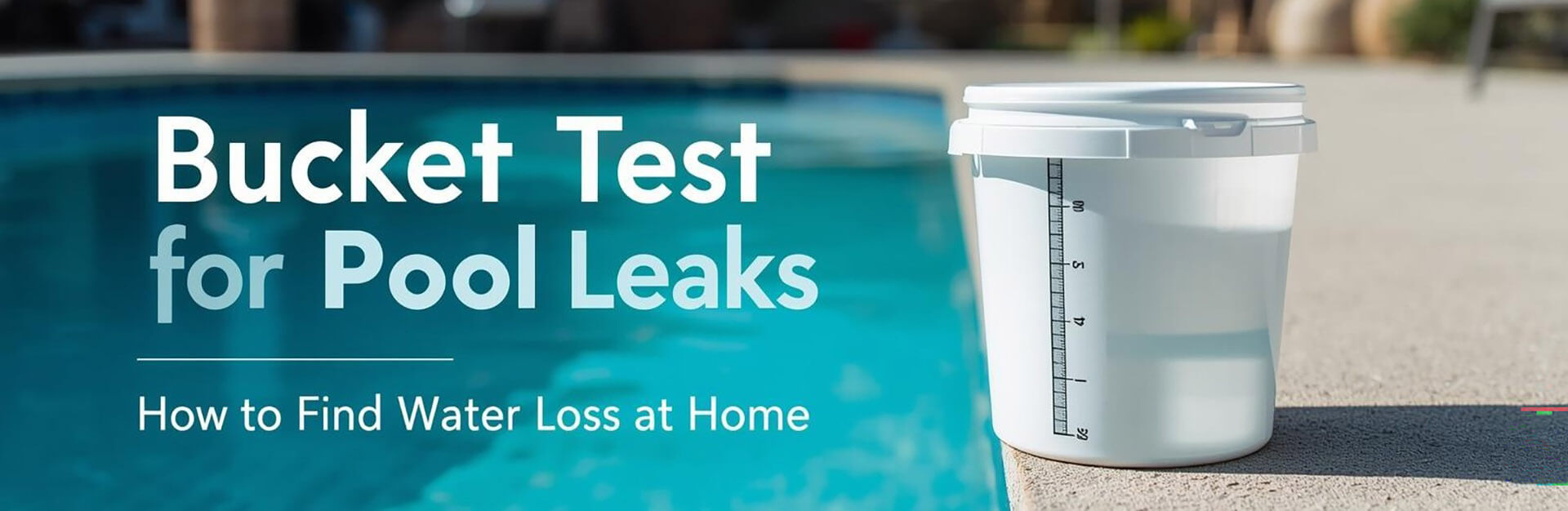
Bucket Test for Pool Leaks: How to Find Water Loss at Home
A swimming pool is more than just a backyard feature—it’s a source of relaxation, exercise, entertainment, and a boost to your home’s value. But like any investment, it requires proper care to maintain its appeal and functionality.
One of the most critical aspects of pool maintenance is monitoring water levels to prevent costly damage.
Unexpected water loss is often the first sign of a problem. That’s where the bucket test comes in—a simple, DIY method to determine if your pool is losing water due to evaporation or a leak.
📘 Not sure if your water loss is normal? Download our free Pool Leak Detection Guide before you start.
Why Monitoring Your Pool’s Water Level Is Critical
Whether you handle pool maintenance yourself or hire a professional, keeping an eye on your water level is essential.
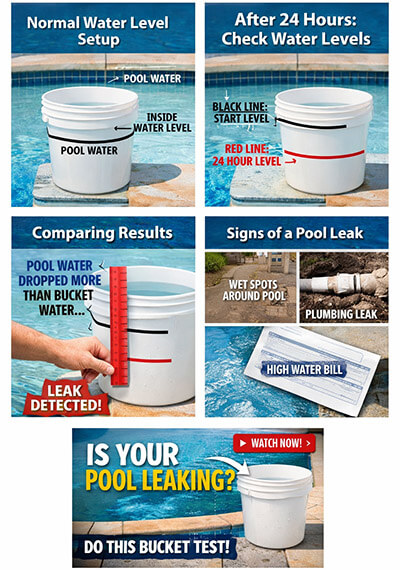
While some water loss is normal, excessive or consistent drops may signal a leak that needs immediate attention.
Normal Water Loss vs. Pool Leaks
Common causes of normal water loss include:
● Evaporation
● Splash-out from swimmers
● Backwashing and cleaning
● Weather conditions like wind, heat, and humidity
Signs of a potential pool leak:
● Adding water more than once a week
● A sudden spike in your water bill
● Wet spots around the pool or equipment
Unlike a car, your pool doesn’t have a dashboard warning light. You are the detection system, and the bucket test is one of the easiest tools to help you identify a problem.
What Is the Bucket Test for Pool Leaks?
The bucket test is a simple, inexpensive, and reliable way to determine if your pool is losing water due to a leak or just evaporation.
It works by comparing the water loss inside a bucket (evaporation only) to the water loss in your pool (evaporation + potential leak).
Important Considerations Before Performing a Bucket Test
To ensure accurate results, follow these best practices:
❌ Avoid performing the test during rain.
⏱ Limit the test to 24 hours—longer durations may reduce accuracy.
📏 Measure and record water loss in inches.
🔍 Compare water level drops inside and outside the bucket.
👉 If the pool water level drops more than the bucket water level, you likely have a leak.
How to Perform the Bucket Test (Step-by-Step)
This quick DIY test can help you determine if your pool has a leak.
What You’ll Need:
- A 5-gallon bucket
- Black and red markers
- Pool steps or a shallow ledge
Step-by-Step Instructions:
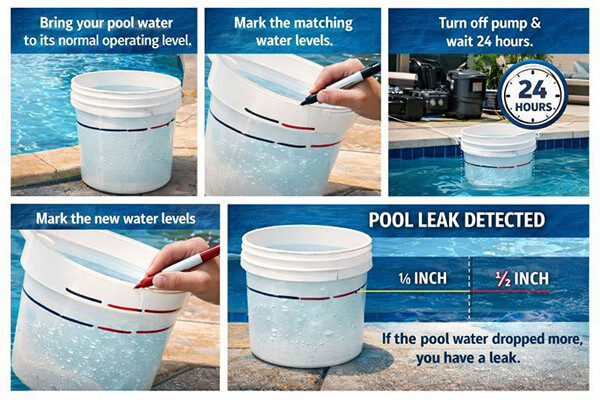
- Bring your pool water to its normal operating level.
- Place the bucket on a pool step so it stays upright and partially submerged.
- Fill the bucket with pool water until the water level inside matches the pool water level outside.
- Mark the water levels:
- Use a black marker to mark the water level inside the bucket.
- Mark the pool water level on the outside of the bucket.
- Turn off the pool pump and auto-fill system
- Wait 24 hours
- Mark the new water levels using a red marker
- Compare the results:
- If the water outside the bucket dropped more than inside, your pool is leaking.
What to Do If the Bucket Test Confirms a Leak
If the bucket test indicates a leak, don’t ignore it. Even a small leak can lead to:
- Structural damage
- Soil erosion
- Higher utility bills
- Equipment failure
The bucket test helps confirm a leak, but it doesn’t tell you how urgent the situation is.
To understand when a pool leak becomes an emergency, see our related post: Is a Pool Leak an Emergency? Here’s What to Know.
Call a Professional Pool Leak Detection Company
If you’re experiencing unexplained pool water loss in New York, North New Jersey, NE Pennsylvania or NW of Connecticut or surrounding areas, professional leak detection can save you thousands in structural and plumbing repairs.
Our professional, non-invasive electronic leak detection services help homeowners pinpoint leaks quickly—without draining the pool or damaging surfaces.
👉 Schedule a professional pool leak inspection today.
Understanding Pool Evaporation Rates
As a general guideline:
✅ ¼ inch per day → Typically normal evaporation
✅ ½ inch per day or more → Possible leak
Evaporation rates depend on factors like:
● Sun exposure
● Temperature
● Humidity
● Wind
● Pool usage
● Season (higher in summer, lower in winter)
If you’re unsure, the bucket test removes the guesswork.
Common Causes of Pool Leaks
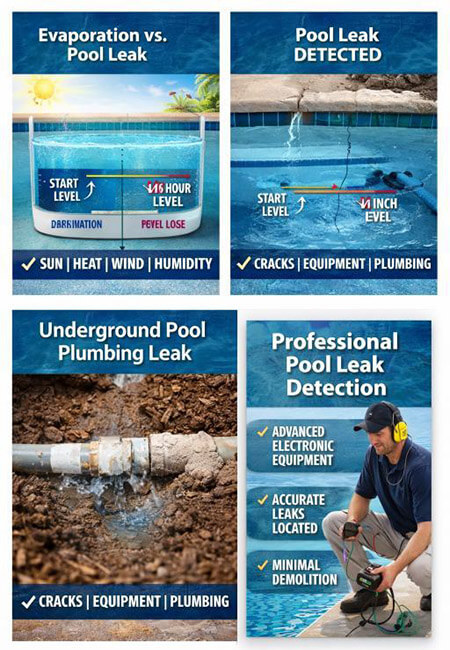 1. Structural Leaks
● Cracks in concrete or fiberglass pools
● Separation at seams or joints
● Leaks around lights, skimmers, or return fittings
2. Plumbing Leaks
● Underground pipe damage
● Soil movement or corrosion
● Pressure-side or suction-side line failures
⚠ These leaks require professional detection tools.
3. Broken or Worn Fittings
● Cracked pipes
● Failed seals
● Loose connections (common in spas and older pools)
Pool leaks are especially common in older pools and freeze-thaw climates like New York, where ground movement can stress plumbing and fittings.
Final Thoughts: Why the Bucket Test Matters
Pools lose water for many reasons—some normal, others costly. The bucket test is a simple first step to determine whether your pool’s water loss is natural or caused by a leak.
If the test confirms a problem, don’t wait. The longer a leak goes untreated, the more damage it can cause.
✅ Take the Next Step (Free Resources)
📘 Download Our FREE Ebook
Learn how to spot pool leaks early and avoid costly repairs.
▶ Subscribe to Our YouTube Channel
Watch real leak detection cases, pool inspections, and expert tips.
🛒 Visit Our Amazon Storefront
Recommended pool tools, testing equipment, and accessories.