
Swimming Pool Maintenance for Beginners (Complete Guide)
Owning a swimming pool is incredibly rewarding—but it also comes with responsibility. Without proper care, small maintenance issues can quickly turn into algae outbreaks, cloudy water, equipment damage, or costly repairs.
This beginner-friendly guide walks you through the essential steps of swimming pool maintenance, including circulation, cleaning, and water chemistry.
Whether you’re a first-time pool owner or simply want a clearer, more reliable routine, you’ll learn how to keep your pool clean, safe, and ready to swim all season long.
📌 Think Your Pool Has a Hidden Problem?
If your water chemistry keeps going out of balance, your pool may have a leak.
👉 Get your free eBook: How to Find Pool Leaks
Why Is Pool Maintenance Important?
Routine pool care is crucial for:
- Preventing algae and harmful bacteria
- Extending the lifespan of pool equipment
- Reducing repair and chemical costs
- Ensuring a safe and enjoyable swimming experience
Whether you’re a first-time pool owner or looking to avoid costly mistakes, this guide will help you master the basics.
✅ Beginner Pool Maintenance Checklist
If you’re new to pool ownership, this simple checklist covers the essential maintenance tasks needed to keep your pool clean, balanced, and problem-free. Following this routine helps prevent algae growth, cloudy water, and unexpected equipment issues.
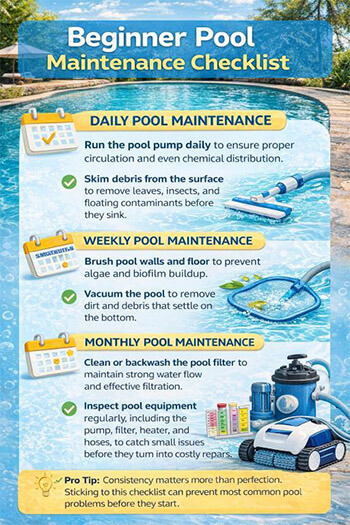
 Daily Pool Maintenance
 Daily Pool Maintenance
- Run the pool pump daily to ensure proper circulation and even chemical distribution.
- Skim debris from the surface to remove leaves, insects, and floating contaminants before they sink.
Weekly Pool Maintenance
- Brush pool walls and floor to prevent algae and biofilm buildup.
- Vacuum the pool to remove dirt and debris that settle on the bottom.
- Test pool water 2–3 times per week to maintain proper pH, chlorine, and alkalinity levels.
Monthly Pool Maintenance
- Clean or backwash the pool filter to maintain strong water flow and effective filtration.
- Inspect pool equipment regularly, including the pump, filter, heater, and hoses, to catch small issues before they turn into costly repairs.
✔ Pro Tip: Consistency matters more than perfection. Sticking to this checklist can prevent most common pool problems before they start.
What Does Pool Maintenance Include?
Pool maintenance revolves around three key pillars:
1. Proper Pool Circulation
2. Routine Pool Cleaning
Balanced Pool Water Chemistry Let’s dive into each one.
1. Proper Pool Circulation: Why It Matters
Pool circulation ensures water moves continuously through the pump, filter, and return jets. Without it, debris settles, algae grows, and chemicals lose effectiveness.
How to Maintain Proper Pool Circulation
- Run the pool pump daily: Follow manufacturer guidelines (typically 8–12 hours per day).
- Inspect the pump and filter regularly: Clean or replace filters to maintain water flow.
- Adjust valves for even water flow: Ensure all areas of the pool are
- Check return jets: Keep them unobstructed and angled for circular water
- Use a robotic pool cleaner: It improves circulation while removing
✅ Good circulation = cleaner water, better chemical distribution, and fewer problems.
2. Routine Pool Cleaning: Step-by-Step
Regular cleaning prevents algae, stains, and cloudy water. Here’s how to keep your pool spotless:
Essential Pool Cleaning Tasks
1. Skim the Pool Surface
- Remove leaves, bugs, and debris using a manual skimmer, built-in skimmer baskets, or a robotic cleaner.
- 🕒 Tip: Skim daily, especially during fall or windy
2. Brush Pool Walls and Floor
- Brushing removes algae before it
- Use the right brush for your pool surface (e.g., stiff bristles for algae, soft bristles for tiles).
- 🕒 Tip: Brush at least once per
3. Vacuum the Pool
- Vacuuming removes debris from the
- Choose from manual vacuums, automatic cleaners, or robotic
- 🕒 Tip: Vacuum weekly or as
4. Clean or Backwash the Pool Filter
- Filters trap dirt and contaminants but need regular
- Follow manufacturer instructions for sand, cartridge, or E. filters.
3. Balanced Pool Water Chemistry: A Beginner’s Guide
Balanced water chemistry keeps swimmers safe and protects your pool equipment.
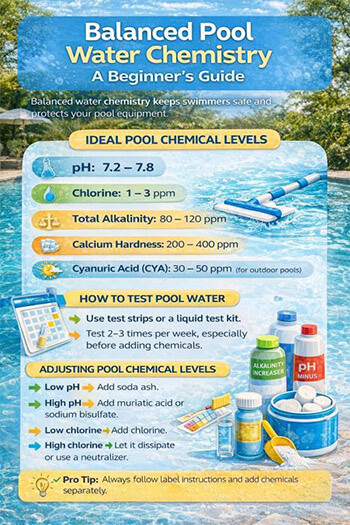
Ideal Pool Chemical Levels
 Ideal Pool Chemical Levels
● pH: 7.2 – 7.8
● Chlorine: 1 – 3 ppm
● Total Alkalinity: 80 – 120 ppm
● Calcium Hardness: 200 – 400 ppm
● Cyanuric Acid (CYA): 30 – 50 ppm (for outdoor pools)
How to Test Pool Water
● Use test strips or a liquid test kit.
● Test 2–3 times per week, especially before adding chemicals.
Adjusting Pool Chemical Levels
● Low pH → Add soda ash.
● High pH → Add muriatic acid or sodium bisulfate.
● Low chlorine → Add chlorine.
● High chlorine → Let it dissipate or use a neutralizer.
⚠ Always follow label instructions and add chemicals separately.
❓ Frequently Asked Questions
How often should a beginner maintain a swimming pool❓
A beginner should perform basic pool maintenance daily and weekly. Daily tasks include skimming debris and checking water clarity.
Weekly maintenance includes brushing walls, vacuuming, testing water chemistry, and cleaning the filter. Consistency prevents algae, bacteria, and costly repairs.
What chemicals are required for basic pool maintenance❓
Basic pool maintenance requires chlorine, pH balancer, alkalinity increaser, and calcium hardness increaser. Outdoor pools also need cyanuric acid to protect chlorine from sunlight. Water should be tested regularly before adding any chemicals.
How long should I run my pool pump each day❓
Most residential pools should run the pump 8–12 hours per day, depending on pool size, filter type, and bather load. Proper circulation ensures debris removal, even chemical distribution, and helps prevent algae growth.
Why does my pool water keep getting cloudy❓
Cloudy pool water is usually caused by poor filtration, unbalanced chemistry, or inadequate circulation. Dirty filters, low chlorine levels, or high pH are common contributors. Regular testing, brushing, vacuuming, and filter maintenance typically resolve the issue.
Is it cheaper to maintain a pool yourself❓
Yes, DIY pool maintenance is cheaper for most homeowners, costing $80–$150 per month in chemicals and supplies. However, improper maintenance can lead to expensive repairs. Many owners combine DIY care with occasional professional inspections.
Can poor pool maintenance cause leaks❓
Yes. Improper chemical balance—especially low pH or low calcium hardness—can damage pool surfaces, plumbing, and equipment, increasing the risk of liner failure and underground leaks.
📌 Not sure if your pool is losing water or just evaporating?
👉 How to Perform the Bucket Test (Step-by-Step)
 📌 Recommended Pool Maintenance Tools for Beginners
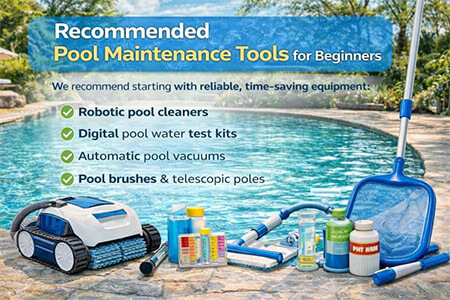 📌 Recommended Pool Maintenance Tools for Beginners
We recommend starting with reliable, time-saving equipment:
✔ Digital pool water test kits
✔ Pool brushes & telescopic poles
💧 Final Thoughts
Swimming pool maintenance doesn’t have to be overwhelming. With consistent care, proper circulation, balanced chemistry, and routine cleaning, your pool will stay clean, safe, and ready for fun year-round.
A well-maintained pool is a worry-free pool. Dive in and enjoy!
✅ Take the Next Step (Free Resources)
 📘 Download Our FREE E-Book
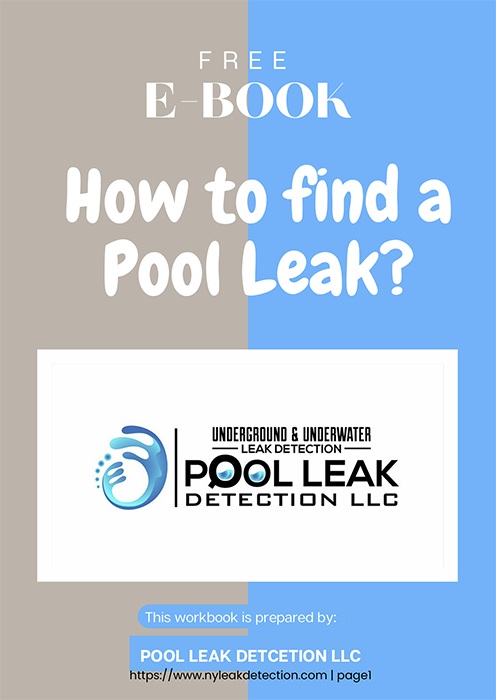 📘 Download Our
Learn how to spot pool leaks early and avoid costly repairs.
▶ Subscribe to Our YouTube Channel
Watch real leak detection cases, pool inspections, and expert tips.
🛒 Visit Our Amazon Storefront
Recommended pool tools, testing equipment, and accessories.