
How to Choose the Best Robotic Pool Vacuum Cleaner (2026 Buyer’s Guide)
Introduction
Manually cleaning a pool is time-consuming, physically demanding, and often inconsistent. Thankfully, robotic pool vacuum cleaners make pool maintenance faster, easier, and more efficient.
With so many options on the market, choosing the best robotic pool cleaner can feel overwhelming.
This guide simplifies the process, helping you make an informed decision that fits your pool and budget.
Why Trust This Buyer’s Guide?
This guide is based on hands-on industry experience, real customer feedback, and current 2026 robotic pool cleaner specifications.
We focus on real-world performance—not just marketing claims—to help pool owners choose the right cleaner with confidence.
Top Picks: Best Robotic Pool Cleaners of 2026
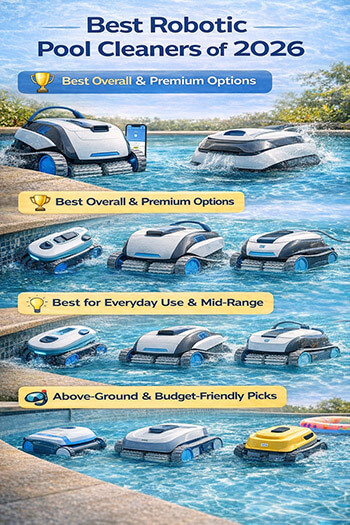
🏆 Best Overall & Premium Options
- AIPER Scuba X1 Pro Max: Advanced coverage, app control, and precision navigation.
- Polaris Freedom Plus: Features a quick water release for added convenience.
- iGarden Pool Cleaner K Pro :This robotic pool cleaner transforms high-volume circulation into a deep, meticulous clean.
- Beatbot AquaSense 2 Ultra: With advanced AI Pool Mapping, it learns the unique shape of your pool.
 💡 Best for Everyday Use & Mid-Range
 💡 Best for Everyday Use & Mid-Range
- WYBOT C1 Cordless: Top cordless pick with strong performance.
- AquaSense 2 Pro: Precision pool cleaning, right from your phone.
- Dolphin Explorer E25 Wi-Fi: Dual brushes, Wi-Fi scheduling, and mobile control.
- Beatbot iSkim Ultra: Harness the power of a 24W solar panel featuring SolarTrack™ technology and an integrated 10,000 mAh battery.
🤿 Above-Ground & Budget-Friendly Picks
- WYBOT C2: Dual Filtration Pool Vacuum Robot for Wall and Waterline Cleaning.
- iGarden Pool Cleaner K60: AI Timer, Smart Navigation, and versatile Features touchscreen and auto-parking.
- Aiper Scuba 800 Cordless: Great value for smaller pools.
- Bublue Bubot 500P: 2X faster cleaning, a 140-minute runtime, and smart wall sensors.
A Step-by-Step Buyer’s Guide:
Step 1: Identify Your Pool Cleaning Needs
Before comparing models, start by evaluating your pool. Ask yourself:
- Pool size: Is it small, medium, or large?
- Pool type: Above-ground or inground?
- Surface material: Vinyl liner, fiberglass, concrete, or tile?
- Debris level: Leaves, sand, dirt, or fine particles?
For example:
- Larger pools need cleaners with longer run times and wider coverage.
- Pools with heavy debris require strong suction power and larger filter baskets.
Understanding your pool’s needs ensures you don’t overpay—or end up with a cleaner that can’t handle the job.
Step 2: Understand the Types of Robotic Pool Cleaners
There are three main types of pool cleaners, each with unique benefits:
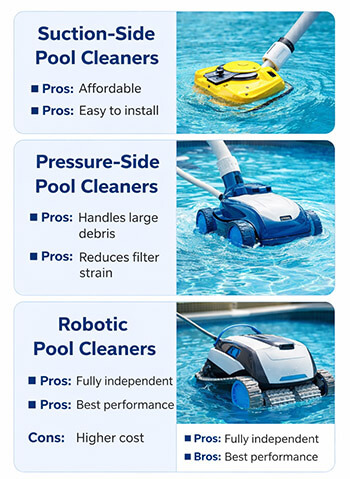
 1. Suction-Side Pool Cleaners
 1. Suction-Side Pool Cleaners
● Pros: Affordable, easy to install, uses your pool’s filtration system.
● Best for: Light debris.
● Cons: Limited power, can clog filters, less effective for heavy cleaning.
2. Pressure-Side Pool Cleaners
● Pros: Handles larger debris, works with above-ground and inground pools, reduces strain on your pool filter.
● Cons: More expensive, may require a booster pump.
3. Robotic Pool Cleaners
- Pros: Fully independent, advanced navigation, scrubs floors, walls, and waterlines, best overall cleaning performance.
- Cons: Higher upfront cost but lowest long-term maintenance.
👉 Pro Tip: For most homeowners, a robotic pool vacuum cleaner is the best long-term investment.
Step 3: Compare Features That Matter
Not all robotic pool vacuums are created equal. Focus on features that match your pool and lifestyle:
- Cleaning coverage: Floor-only floor, walls, and waterline.
- Filtration system: Fine ultra-fine filters.
- Navigation technology: Smart mapping random movement.
- Corded cordless: Convenience vs. runtime.
- Cycle length: Short daily cleans deep cleaning modes.
- Ease of maintenance: Top-load filters save time.
Choosing the right features improves performance and reduces maintenance headaches.
Step 4: Read Customer Reviews and Expert Feedback
 Step 4: Read Customer Reviews and Expert Feedback
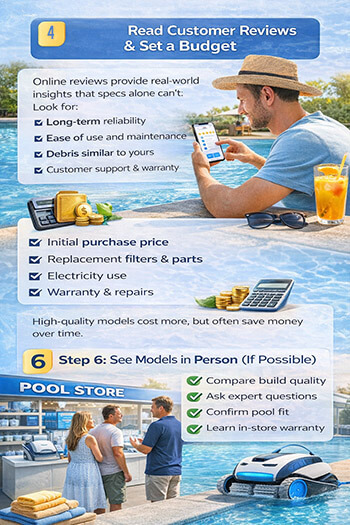
Online reviews provide real-world insights that specs alone can’t. Look for:
- Long-term reliability.
- Ease of use and maintenance.
- Effectiveness on debris similar to yours.
- Customer support and warranty experience.
Read reviews across multiple platforms for a balanced perspective.
Step 5: Set a Realistic Budget
Robotic pool vacuum cleaners range from $400 to $1,500+. Consider the total cost of ownership, including:
- Initial purchase price.
- Replacement filters and parts.
- Electricity usage.
- Warranty length.
- Service or repair coverage.
While high-quality models have a higher upfront cost, they often save money over time due to durability and lower maintenance.
Step 6: See Models in Person (If Possible)
Visit a pool supply store to:
- Compare build quality.
- Ask expert questions.
- Confirm compatibility with your pool.
- Learn about in-store warranties or service plans.
This step can help finalize your decision with confidence.
Conclusion: Choosing the Best Robotic Pool Vacuum Cleaner
 Conclusion: Choosing the Best Robotic Pool Vacuum Cleaner
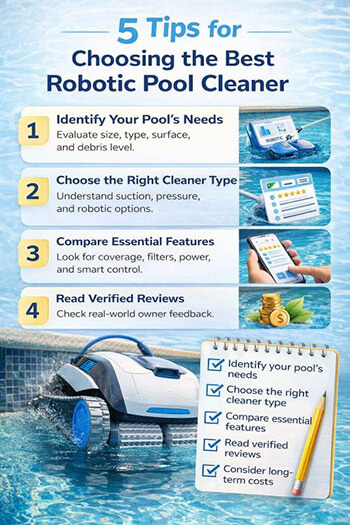
Selecting the best robotic pool vacuum cleaner comes down to matching the cleaner to your pool’s size, surface, debris level, and budget.
Quick Recap:
1. Identify your pool’s
2. Choose the right cleaner
3. Compare essential
4. Read verified
5. Consider long-term
By following these steps, you’ll find a robotic pool cleaner that keeps your pool spotless—so you can spend less time cleaning and more time enjoying your pool.
Looking for professional help?
If you’re dealing with unexplained water loss, a robotic cleaner may not solve the underlying issue. 👉 Schedule a professional pool inspection or leak detection here.
FAQ: Common Questions About Robotic Pool Cleaners
Is a robotic pool vacuum cleaner worth it?
Yes! Robotic pool cleaners save time, reduce manual effort, and deliver efficient cleaning. They’re energy-efficient and independent of your pool’s filtration system.
What’s the difference between corded and cordless models?
Corded models provide consistent power and deeper cleaning, while cordless models offer convenience without tangling cables.
Can robotic pool cleaners climb walls?
Many advanced models can climb walls and clean waterlines, making them ideal for inground pools or irregular shapes.
How often should I run my robotic pool cleaner?
For most pools, running the cleaner 2–3 times per week keeps water clear and reduces chemical use. Heavy debris may require daily cleaning.
✅ Take the Next Step (Free Resources)
📘 Download Our FREE Ebook
Learn how to spot pool leaks early and avoid costly repairs.
▶ Subscribe to Our YouTube Channel
Watch real leak detection cases, pool inspections, and expert tips.
🛒 Visit Our Amazon Storefront
Recommended pool tools, testing equipment, and accessories.