

The Ultimate Guide to Swimming Pool Supplies
Owning a swimming pool is a dream upgrade for any home, but it comes with responsibilities.
The right swimming pool supplies—from water testing kits to energy-efficient pool equipment—are essential for maintaining clean water, ensuring safe swimming conditions, and keeping costs affordable.
Whether you’re a first-time pool owner or managing an above-ground pool, this guide covers everything you need to know about essential pool maintenance supplies and smart upgrades.
Who This Guide Is For
This guide is designed to help a wide range of pool owners, including:
● New pool owners navigating maintenance for the first time.
● Above-ground pool owners looking for tailored supply recommendations.
● Homeowners looking to reduce pool costs with affordable and energy-efficient solutions.
● DIY maintenance-focused homeowners who prefer hands-on pool care.
● Pool owners upgrading to energy-efficient equipment for long-term savings.
No matter your experience level or pool type, this guide provides actionable tips and product recommendations to simplify pool ownership.
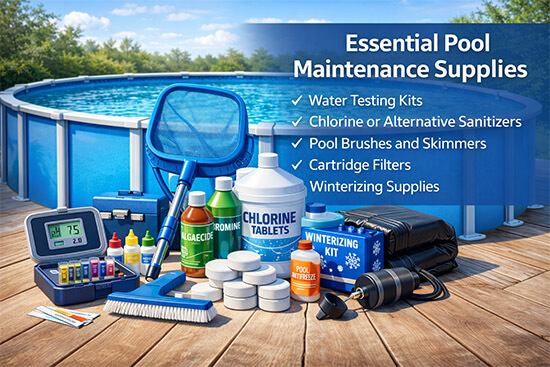
Essential Pool Maintenance Supplies
To keep your pool water crystal clear and safe, these core supplies are non-negotiable:
● Water Testing Kits: Ensure balanced water chemistry to prevent algae, scaling, and corrosion.
● Chlorine or Alternative Sanitizers: Keep your pool free of harmful bacteria.
● Pool Brushes and Skimmers: Remove debris and prevent algae buildup.
● Cartridge Filters: Maintain proper filtration for clean, clear water.
● Winterizing Supplies: Protect your pool during colder months with covers, antifreeze, and freeze plugs.
👉 See our recommended pool maintenance equipment here.
How Proper Pool Supplies Help Prevent Leaks
Preventing leaks is a critical part of pool maintenance, and the right supplies play a key role in protecting your pool’s structure and plumbing.
Here’s how proper pool care can help you avoid costly repairs:
 1. Balanced Chemistry Prevents Corrosion
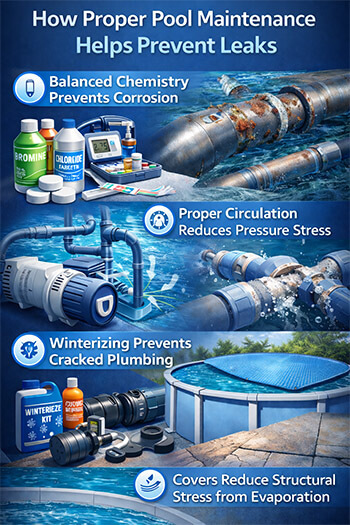 1. Balanced Chemistry Prevents Corrosion
● Imbalanced water chemistry is one of the top causes of premature pool equipment failure. Corrosion can damage metal components like ladders, handrails, and plumbing fixtures.
● Using the right pool chemicals—like pH balancers, chlorine stabilizers, and algaecides—helps maintain water quality and prevents damage to your pool’s infrastructure.
2. Proper Circulation Reduces Pressure Stress
● A well-maintained pump and filter system ensures even water circulation, reducing pressure buildup in pipes and fittings.
● Did you know? Pool pumps can account for up to 20% of a home’s electricity use. Investing in energy-efficient pumps not only reduces strain on your plumbing but also lowers energy bills.
3. Winterizing Prevents Cracked Plumbing
● Freezing temperatures can cause water in your pipes to expand, leading to cracks and leaks.
● Essential winterizing supplies, like freeze plugs, antifreeze, and winter covers, protect your plumbing during colder months.
4. Covers Reduce Structural Stress from Evaporation
● Evaporation is responsible for up to 70% of pool heat loss, which can lead to fluctuating water levels and structural stress.
● A quality pool cover minimizes water loss, maintains water levels, and reduces the risk of cracks caused by pressure changes.
Is your pool losing water faster than normal evaporation?
Before you waste money on chemicals and refilling, grab our free step-by-step leak detection guide.
✔ How to perform accurate water loss tests
✔ Common leak locations most homeowners miss
✔ When DIY is enough — and when to call a pro
👉 Download Your Free Copy Today

Pool Supplies for Above-Ground vs. In-Ground Pools
When it comes to maintaining your pool, the type of pool you own—above-ground or in-ground—determines the supplies and equipment you’ll need. Here’s a breakdown of the key differences:
| Feature | Above-Ground Pools | In-Ground Pools |
| Pump Size | Smaller, less powerful pumps. | Larger, more powerful pumps. |
| Brush Type | Soft nylon brushes for vinyl liners. | Stainless steel brushes for concrete/gunite. |
| Filter Type | Compact cartridge filters. | Cartridge, sand, or DE filters. |
| Winterizing Approach | Air pillows, antifreeze, and winter covers. | Blowing out lines, freeze plugs, heavy-duty covers. |
| Robotic Cleaner | Lightweight models for smaller pools. | Full-featured models for larger areas. |
By understanding these differences, you can choose the right pool supplies to keep your pool in top condition, whether it’s above-ground or in-ground.
Energy-Efficient Pool Equipment & Smart Upgrades
Investing in energy-efficient pool equipment can dramatically lower operating costs. Consider these upgrades:
● Variable-Speed Pool Pumps: These pumps use significantly less electricity than single-speed models, helping to reduce the 20% of household energy consumption that pool pumps typically account for.
● Solar Pool Covers: By reducing evaporation (the leading cause of heat loss), solar covers lower heating costs and conserve water.
● LED Pool Lighting: LED lights use up to 80% less energy than traditional incandescent bulbs, making them a cost-effective and eco-friendly choice.
👉 Explore our top-rated energy-efficient essential & accessories.
Common Pool Supply Mistakes to Avoid
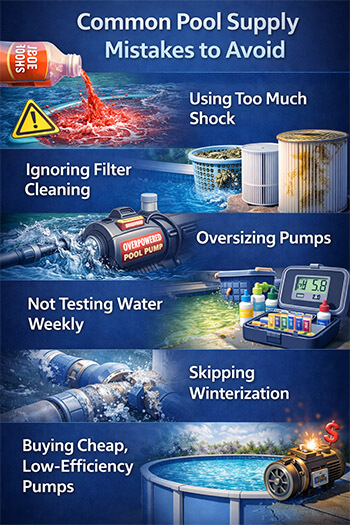 Even experienced pool owners can make mistakes that lead to higher costs, equipment damage, or unsafe swimming conditions. Avoid these common pitfalls:
1. Using Too Much Shock: Over-shocking can lead to cloudy water and wasted chemicals.
2. Ignoring Filter Cleaning: A dirty filter reduces circulation efficiency and can lead to algae growth.
3. Oversizing Pumps: Bigger isn’t always better. Oversized pumps waste energy and wear out systems.
4. Not Testing Water Weekly: Skipping tests can result in imbalanced chemistry and costly repairs.
5. Skipping Winterization: Failing to winterize can cause cracked pipes and damaged pumps.
6. Buying Cheap, Low-Efficiency Pumps: Low-quality pumps may save money upfront but lead to higher energy bills.
Average Cost of Swimming Pool Supplies
Understanding the costs of essential pool supplies can help you budget effectively. Here’s a detailed breakdown:
| Supply Type | Estimated Cost |
| Test Kit | $15–$150 |
| Chlorine (monthly) | $20–$60 |
| Cartridge Filters | $40–$120 |
| Variable-Speed Pump | $600–$1,500 |
| Robotic Cleaner | $400–$1,500 |
Additional Costs to Consider
● Winterizing Supplies: $50–$300 (includes covers, antifreeze, and freeze plugs).
● Solar Pool Covers: $100–$500, depending on size and quality.
● Pool Automation Systems: $500–$2,000 for smart control of pumps, lighting, and cleaning cycles.
Pro Tip: While some items, like robotic cleaners and variable-speed pumps, have higher upfront costs, they often pay for themselves through energy savings and reduced maintenance over time.
Frequently Asked Questions About Swimming Pool Supplies
1. How often should I test my pool water?
At least 2–3 times per week during peak swimming season.
2. What are the most important pool chemicals?
Chlorine, pH balancers, algaecides, and shock treatments are essential for maintaining water quality.
3. Are robotic pool cleaners worth it?
Yes, they save time, reduce manual effort, and improve filtration efficiency.
4. How can I reduce my pool operating costs?
Invest in energy-efficient equipment, use solar covers, and maintain balanced water chemistry.
5. What pool supplies do beginners often forget?
Water testing kits, skimmer socks, replacement filters, and winterizing supplies.
6. How do I prevent leaks in my pool?
Maintain balanced water chemistry, ensure proper circulation, and winterize your pool.
7. What’s the best way to winterize my pool?
Use a winter cover, add antifreeze, and blow out plumbing lines to prevent freezing damage.
Suspect your pool is losing water?
 Suspect your pool is losing water?
Download our FREE Pool Leak Detection Ebook and learn how to spot leaks early, perform simple at-home tests, and know when it’s time to call a professional.
Stay Connected for More Pool Tips
Follow us for expert advice on pool maintenance, leak detection, and backyard safety.
- YouTube: Pool Leak Detection LLC
- Instagram: @poolleakdetectionllc
- Facebook: Pool Leak Detection LLC
- Pinterest: Pool Leak Detection LLC
- LinkedIn: Chris Ilias