

20 Common Questions About Pool Leaks (And How to Fix Them)
Is your pool losing water? It’s frustrating to see water levels drop, and it’s hard to tell if it’s just evaporation or a leak draining your wallet. Ignoring a potential leak can lead to structural damage and high utility bills. Luckily, many leaks can be found with simple DIY tests, saving you thousands in repairs.
If you suspect a leak, you probably have questions. This guide answers the 20 most common questions about finding and fixing pool leaks.
Download our free eBook for step-by-step guidance on finding and fixing pool leaks.
1. How do I know if my pool is leaking or just evaporating?
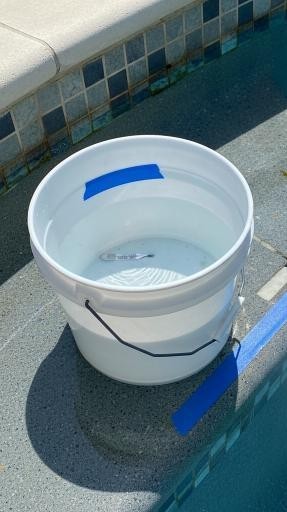
Evaporation is normal, but it has limits. Typically, a pool will lose about ⅛ to ¼ inch of water per day due to evaporation, depending on humidity, wind, and temperature.
If you notice faster or inconsistent water loss, you likely have a leak.
The best way to confirm this is with the “bucket test.”
- Fill a bucket with
- Place it on a pool step so the water inside matches the pool level.
- Mark both water
- Compare after 24
After 24 hours, compare the loss. If the pool water has dropped more than the water in the bucket, you have a leak.
2. What are the most common causes of pool leaks?
Pools are complex systems, and leaks can spring up in various places. The most frequent culprits include:
- Vinyl liner tears or punctures: Sharp objects or age can cause small holes.
- Cracks in fiberglass or plaster: Structural shifting or ground movement often leads to cracks.
- Failing skimmer throats or gaskets: The seal between the skimmer and the pool wall is a common weak point.
- Loose or deteriorated return fittings: Fittings can loosen over time due to vibration.
- Light niches and conduits: The electrical conduit behind the light fixture is a notorious leak spot.
- Underground plumbing lines: Roots or ground settling can crack pipes hidden underground.
- Faulty steps or faceplates: Gaskets around stairs often wear out.
3. Do small leaks really matter?
Absolutely. A leak as small as a pinhole can waste thousands of gallons of water a month. Beyond the wasted water, a small leak drives up your chemical costs because you are constantly diluting treated water with fresh tap water.
More importantly, water escaping into the ground around your pool can erode the soil, leading to hollow spots or sinkholes that compromise the pool’s structural integrity.
4. What’s the fastest way to test for a liner leak?
The dye test is the most accurate DIY method for finding surface leaks. You can buy a professional dye tester or use food coloring in a pinch. With the pool pump off and the water still, squirt a small amount of dye near suspected areas like seams, corners, steps, returns, and lights. If the dye is sucked into a crack or hole, you’ve found your leak.
- Turn off the pump
- Keep the water still
- Use a dye tester or food coloring near suspected areas
- Watch whether the dye gets pulled into a hole or crack
5. Can my pool lose water even when the pump is off?
Yes. If the leak is located in the pool’s structure (like a crack in the shell) or the liner, gravity will force water out regardless of whether the pump is running. However, if the leak is in the plumbing lines, the rate of water loss might change depending on whether the system is pressurized (pump on) or idle (pump off).
Shop high-quality pool equipment today for a hassle-free pool experience!

6. What does it mean if my pool only leaks when the pump is running?
This usually indicates a leak on the “pressure side” of your plumbing system, which includes the return lines pushing water back into the pool. When the pump runs, it pressurizes these pipes, forcing water out through any cracks or loose fittings much faster than when the system is off.
7. What does it mean if my pool leaks when the pump is off?
If you lose more water when the pump is off, the issue is often on the “suction side” of the plumbing, such as the skimmer or main drain lines. When the pump is running, these lines are under vacuum (suction), which can pull air in rather than letting water out. When the pump shuts off, the vacuum releases, and water can leak out into the surrounding soil.
8. Can I find a leak myself, or do I need a professional?
You can definitely find some leaks yourself. DIY dye tests are effective for locating surface leaks in liners, fittings, steps, faceplates, and lights. However, if the leak is hidden inside underground pipes, under the concrete deck, or deep within the skimmer assembly, you will likely need a professional leak detector equipped with specialized listening devices and pressure testing gear.
9. How long does a professional leak detection take?
For most residential pools, a professional inspection takes between 1 and 3 hours. The time varies based on the type of pool (vinyl, fiberglass, or concrete), the number of water features (like waterfalls or slides), the complexity of the plumbing, and water visibility.
10. Is a pool leak dangerous?
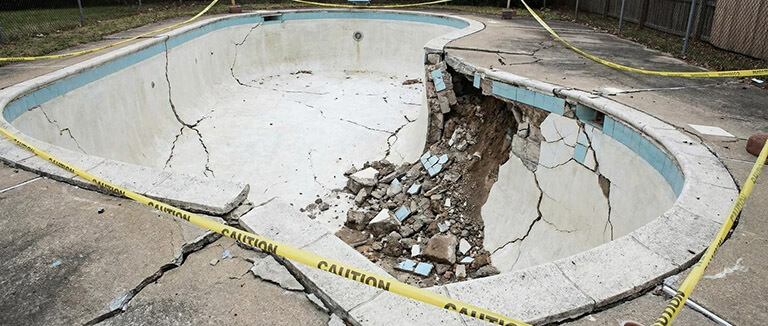
Yes, ignored leaks can be dangerous and costly. Over time, escaping water can wash away the supporting soil, causing sinkholes, deck movement, or even catastrophic structural collapse.
Additionally, if the water level drops too low while the pump is running, it can cause the pump to overheat and burn out, leading to expensive equipment repairs.
Download Our Free Ebook “How to Find a Pool Leak?”

11. Is a leak patch on a vinyl liner permanent?
While high-quality vinyl patches can last for months or even years if applied correctly, they are generally considered temporary repairs. If your liner is older—typically 8 to 10 years—and developing frequent leaks, patching might just be a band-aid solution. In these cases, a full liner replacement is often the better long-term investment.
12. What’s the average cost to repair a pool leak?
The cost varies significantly depending on the location and severity of the problem. A simple DIY liner patch might cost less than $50. A professional repair on a skimmer throat or gasket is a moderate expense. However, fixing a cracked underground plumbing line that requires cutting through the pool deck can be expensive. Always get a professional inspection first to ensure you are fixing the right issue.
13. Can a new pool liner still leak?
Unfortunately, yes. New liners can leak due to installation errors, such as poor sealing around faceplates or gaskets. Wrinkled corners, misaligned gaskets, or seams that don’t lie flat can all create leak points. Additionally, debris left behind during installation can puncture the new material from the underside.
Check Out Our Recommended Products
Visit our Amazon storefront for expert-recommended pool maintenance products, repair kits, and accessories that save you time and money!
14. Do I have to drain the pool to fix a leak?
In most cases, no. Modern underwater glues and vinyl patches are designed to be applied while the pool is full. Draining a pool is risky; vinyl liners can shrink and become brittle, and fiberglass or concrete shells can “float” or crack due to groundwater pressure. You should only drain a pool if absolutely necessary and under professional guidance.
15. How long can I wait before fixing a leak?
You shouldn’t wait. Water loss accelerates structural problems. The longer water saturates the ground around your pool, the higher the risk of soil erosion and deck settling. Fixing a leak as soon as it is identified prevents a minor repair from turning into a major renovation project.
16. What’s the best tool to find pool leaks?
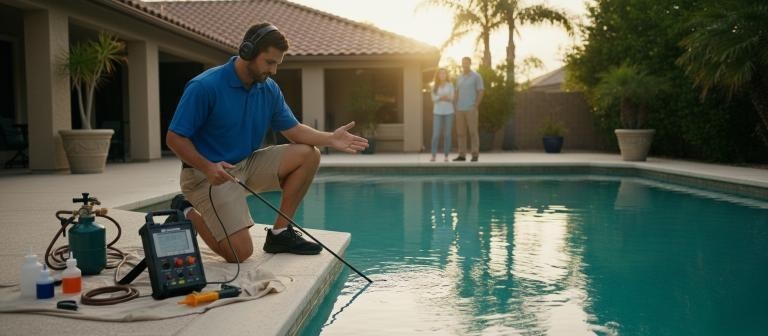
For homeowners, a dye tester or syringe kit is the best tool. You can also use a mask and snorkel to inspect the pool floor and walls closely.
Professionals use more advanced equipment, such as hydrophones (underwater microphones) to listen for the sound of escaping water, pressure testing rigs to test plumbing lines, and electronic leak tracers that detect electrical current flow through leaks in vinyl liners.
17. Why does my pool only lose water to a certain level?
If your water level drops and then stops at a specific point, the leak is likely located exactly at that level. This is a huge clue. Check all components at that waterline, including the returns, light niche, skimmer faceplate, or specific steps.
18. Can algae cause a pool to look like it’s leaking?
Algae itself does not cause leaks, but it can make detection difficult. Algae blooms can cloud the water, making it impossible to see cracks or dye tests. In rare cases, severe algae can block lines or filters, affecting pressure readings, but it won’t physically create a hole in your pool.
19. How much water is too much to lose?
Generally, losing more than ¼ inch of water per day indicates a problem. While hot, dry, and windy weather can increase evaporation, anything exceeding this amount consistently is a strong sign of a leak.
20. Should I shut off my pool if I suspect a leak?
If the water level drops below the skimmer intake, you must turn off the pump immediately. Running a pump “dry” (sucking air instead of water) will cause it to overheat and melt internal components. If the water loss is rapid, shut the system down to prevent further damage and erosion while you wait for repairs.

Don’t Let a Leak Drain Your Fun!
Catching leaks early protects your pool, your yard, and your budget.
Whether it’s a simple patch or a complex plumbing repair, acting fast prevents bigger damage.
Want help diagnosing your leak?
Download our free ebook on how to find a pool leak, or visit my website for professional leak detection services.