
Getting Your Swimming Pool Ready for Summer: A Complete Step-by-Step Opening Guide
Opening your swimming pool for summer is more than just removing the cover — it’s about ensuring clean water, balanced chemistry, and fully functioning equipment.
A properly opened pool means crystal-clear water, safer swimming, and fewer surprise repairs— so you can enjoy the season instead of fixing problems.
This prevents costly repairs, algae blooms, and chemical waste, setting you up for a stress-free swim season.
Follow this expert step-by-step pool opening guide to get your pool summer-ready.
👉 Everything you need in one place — check out our Amazon storefront for essential pool maintenance gear.
 Pool Opening Checklist: Step-by-Step Spring Startup
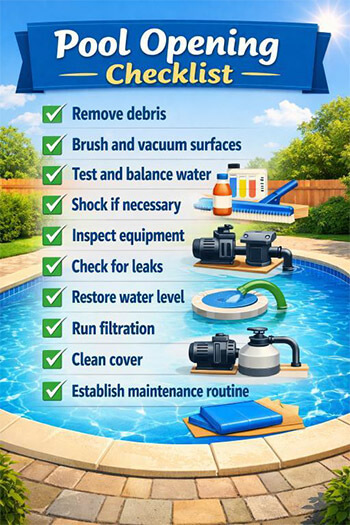 Pool Opening Checklist: Step-by-Step Spring Startup
Quick Pool Opening Checklist
✔ Remove debris
✔ Brush and vacuum surfaces
✔ Test and balance water
✔ Shock if necessary
✔ Inspect equipment
✔ Check for leaks
✔ Restore water level
✔ Run filtration
✔ Clean cover
✔ Establish maintenance routine
Pro Tip: Pools opened early in spring are less likely to develop algae.
When should you open your pool?
Most pool professionals recommend opening your pool when water temperatures consistently stay below about 70°F (21°C).
Cooler water slows algae growth, making startup cleaning and chemical balancing much easier.
Waiting until temperatures rise often leads to cloudy or green water that requires more time, chemicals, and effort to correct — so opening early helps you start the swim season with fewer problems.
1. Remove Debris from the Pool Surface
Start by clearing leaves, sticks, insects, and floating debris using a pool skimmer or net.
Removing organic material early prevents staining, algae growth, and clogged filtration systems.
Pro Tip: Empty skimmer baskets frequently during opening — spring debris accumulates fast.
2. Brush and Vacuum the Pool Thoroughly
Winter often leaves dirt, algae film, or sediment on pool surfaces.
- Brush walls, steps, corners, and the waterline.
- Vacuum debris from the pool floor.
- Pay special attention to low-circulation zones.
This step restores surface cleanliness and improves chemical effectiveness.
3. Test and Balance Pool Water Chemistry
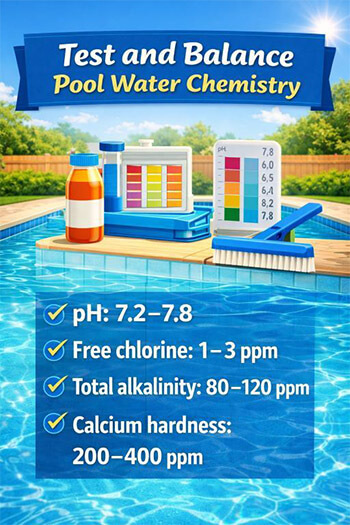 3. Test and Balance Pool Water Chemistry
Balanced water protects swimmers and equipment while preventing scaling and algae growth.
Use a reliable pool water test kit and adjust to these levels:
- pH: 2 – 7.8
- Free chlorine: 1 – 3 ppm
- Total alkalinity: 80 – 120 ppm
- Calcium hardness: 200 – 400 ppm
Adjust gradually and circulate water between treatments.
👉 New to pool care? Read our complete Pool Maintenance for Beginners guide to keep your water clean and balanced all season.
4. Shock the Pool if Needed
If the water appears cloudy, smells strongly of chlorine, or shows algae presence, apply a chlorine shock treatment.
Shocking oxidizes contaminants and restores sanitizer effectiveness.
✔ Follow manufacturer dosing instructions.
✔ Wear protective gloves and eyewear.
✔ Run circulation during treatment.
5. Inspect Pool Equipment Before Startup
Examine all mechanical components, including:
- Pump and motor operation.
- Filter condition.
- O-rings and seals.
- Plumbing connections.
- Filter and pump baskets.
Replace worn parts before running the system to prevent damage.
6. Check for Leaks Before Filling
Before topping off the pool, inspect:
- Liner seams and fittings.
- Visible plumbing connections.
- Unusual water loss.
Early detection prevents water waste and equipment stress.
7. Restore Proper Water Level
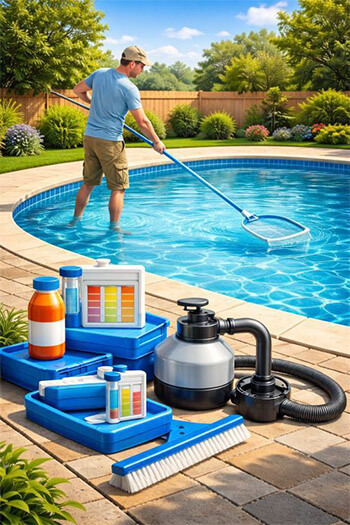 7. Restore Proper Water Level
Fill the pool until the water reaches the midpoint of the skimmer opening. Avoid overfilling to ensure efficient circulation.
Common Pool Opening Problems
- Cloudy water → circulation + shock
- Low chlorine → rebalance
- Poor flow → check baskets/filter
8. Run the Pump and Filtration System
Turn on circulation and allow the system to run continuously for at least 24 hours. This:
- Filters suspended debris.
- Distributes chemicals evenly.
- Stabilizes water balance.
Retest water afterward and fine-tune chemistry.
9. Clean and Store Your Pool Cover
If you used a winter cover:
- Rinse thoroughly.
- Remove debris and residue.
- Allow full drying before storage.
Proper care prevents mold and extends the cover’s lifespan.
10. Consider Equipment Upgrades
Older equipment can increase operating costs. Energy-efficient upgrades may include:
- Variable-speed pumps.
- Cartridge filters.
- Automated chlorination systems.
These improvements reduce electricity use and maintenance demands.
11. Improve Pool Safety Measures
Safety should always be part of seasonal pool preparation. Consider:
- Safety covers.
- Pool fencing.
- Self-latching gates.
- Pool alarms.
These precautions reduce accident risks, especially for children and pets.
👉 Want to make your pool safer? Learn about pool alarms and essential safety features here.
12. Establish a Summer Maintenance Routine
Consistent care keeps your pool swim-ready. Include:
- Weekly water testing.
- Skimming and brushing.
- Basket cleaning.
- Filter maintenance.
Professional annual servicing helps identify hidden issues.
13. Hire Professional Pool Service
If maintenance feels overwhelming, professional pool technicians can:
- Perform seasonal opening.
- Balance chemicals.
- Inspect equipment.
- Provide expert troubleshooting.
This can save time and prevent costly mistakes.
Pool Opening Recap — Step-by-Step Summary
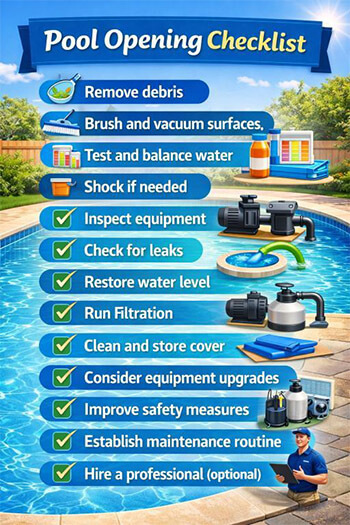 Follow this expert guide to get your pool summer-ready:
1. Remove debris — Clear leaves and floating material to prevent staining and clogged filtration.
2. Brush and vacuum surfaces — Clean walls, steps, and the floor to remove winter buildup and improve sanitizer effectiveness.
3. Test and balance water chemistry — Adjust pH, chlorine, alkalinity, and hardness for safe, clear water.
4. Shock the pool if needed — Eliminate contaminants and algae when water appears cloudy or unstable.
5. Inspect pool equipment — Check pump, filter, seals, and connections to ensure proper operation.
6. Check for leaks — Inspect liners and plumbing to prevent water loss and equipment strain.
7. Restore proper water level — Fill to the skimmer midpoint for efficient circulation.
8. Run the filtration system — Circulate water for 24 hours to stabilize clarity and chemistry.
9. Clean and store the pool cover — Rinse, dry, and store properly to extend its lifespan.
10. Consider equipment upgrades — Improve efficiency with modern pumps or filtration systems.
11. Improve safety measures — Add covers, fencing, or alarms to reduce accident risks.
12. Establish a maintenance routine — Maintain weekly cleaning and testing for consistent water quality.
13. Hire professional service (optional) — Get expert help if needed to avoid costly mistakes.
Why Proper Pool Opening Matters?
A systematic pool startup prevents algae outbreaks, protects equipment, reduces chemical waste, and ensures safe swimming conditions.
When done correctly, your pool will remain cleaner, easier to maintain, and more enjoyable all season long.
Shop Recommended Pool Supplies
Explore our top-rated pool maintenance tools and accessories:
👉 Shop our curated pool supplies collection
Frequently Asked Questions About Opening a Swimming Pool for Summer
How long does it take to open a swimming pool for summer?
Most pool openings take 4 to 8 hours, depending on pool size, winter condition, and equipment setup.
If the water is heavily contaminated or algae developed during winter, additional cleaning and chemical balancing may extend the process over several days.
When is the best time to open a pool after winter?
The ideal time to open your pool is when water temperatures consistently stay below about 70°F (21°C).
Opening early helps prevent algae growth, reduces chemical demand, and makes startup easier.
Waiting too long often leads to cloudy or green water that requires more intensive treatment.
Should I shock my pool before or after balancing chemicals?
Shock treatment is most effective after initial water balancing, especially pH adjustment.
Proper pH allows chlorine to work efficiently. If your water is severely cloudy or green, you may shock first to stabilize sanitation, then fine-tune chemistry afterward.
Why is my pool cloudy after opening?
Cloudy water after opening is usually caused by:
- Suspended debris from winter
- Poor circulation
- Imbalanced pH or sanitizer levels
- Early algae activity
Running the filtration system continuously, brushing surfaces, and correcting chemistry typically clears the water within 24–72 hours.
Can I open my swimming pool myself, or should I hire a professional?
Many homeowners successfully open their pools using a step-by-step process.
However, professional service may be beneficial if you’re dealing with equipment issues, persistent algae, or plumbing concerns.
Hiring a technician can prevent mistakes that lead to costly repairs.
How much water should I add when opening my pool?
Fill the pool until the water level reaches the midpoint of the skimmer opening.
This ensures proper circulation and prevents air from entering the pump system. Avoid overfilling, as it reduces skimming efficiency.
Do I need to run the pool pump continuously after opening?
Yes — running the pump 24 hours straight after startup helps filter winter debris, distribute chemicals evenly, and stabilize water clarity.
Afterward, you can return to a normal circulation schedule based on pool size and usage.
What chemicals are most important when opening a pool?
The key priorities are:
- pH adjustment
- Chlorine or sanitizer level
- Total alkalinity
- Calcium hardness
Balanced chemistry protects swimmers, prevents algae growth, and extends equipment life.
Why should I check for leaks when opening my pool?
Winter conditions can stress liners, fittings, and plumbing connections. Detecting leaks early prevents water loss, equipment strain, and structural damage — saving money and avoiding mid-season repairs.
 A suspected pool leak can be a homeowner’s nightmare, leading to water loss, higher bills, and potential damage to your property.
Don’t let a small leak turn into a major issue.
👉Download our comprehensive free ebook, “The Homeowner’s Guide to Pool Leak Detection“.
Inside, you’ll find simple, step-by-step methods for accurately finding leaks before they become costly problems, helping you save time, money, and stress.
How soon can I swim after opening my pool?
You can swim once:
- Water chemistry is balanced
- Shock treatment has dissipated
- The water is clear
This typically takes 24–48 hours, depending on treatment levels and circulation efficiency.
👉 Everything you need in one place — check out our Amazon storefront for essential pool maintenance gear.
Follow Pool Leak Detection LLC
 Follow Pool Leak Detection LLC
Stay informed with expert pool maintenance tips and leak-prevention guides:
- YouTube: Pool Leak Detection LLC
- Instagram: @poolleakdetectionllc
- Facebook: Pool Leak Detection LLC
- Pinterest: Pool Leak Detection LLC
- LinkedIn: Chris Ilias