

The Ultimate Above-Ground Pool Maintenance Guide (2026)
Learning how to maintain an above-ground pool properly can save you thousands of dollars in repairs, chemicals, and water waste. Whether you’re dealing with cloudy water, algae growth, or just want a simple weekly routine, this step-by-step above-ground pool maintenance guide will show you exactly what to do—and when to do it.
Whether you’re a first-time pool owner or just need a refresher, you’ll find expert pool cleaning tips, seasonal preparation steps, and an above-ground pool chemicals guide to support your routine.
Above-Ground Pool Maintenance at a Glance
 Quick Start Maintenance Schedule
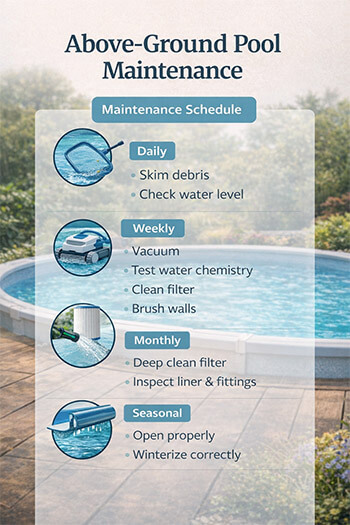 Quick Start Maintenance Schedule
Daily
● Skim debris
● Check water level
Weekly
● Vacuum
● Test water chemistry
● Clean filter
● Brush walls
Monthly
● Deep clean filter
● Inspect liner & fittings
Seasonal
● Open properly
● Winterize correctly
Why Regular Above-Ground Pool Maintenance is Essential
Consistent pool care does more than just keep the water sparkling; it protects your investment and prevents costly problems.
Understanding why maintenance matters is the first step in learning how to maintain an above-ground pool effectively.
1. Swimmer Safety
The most important reason for diligent maintenance is safety. Balanced water chemistry, as outlined in our above-ground pool chemicals guide, is crucial for eliminating harmful bacteria, pathogens, and other contaminants.
Correct chlorine and pH levels prevent skin and eye irritation, ensuring a safe swimming environment for family and friends.
2. Equipment Longevity
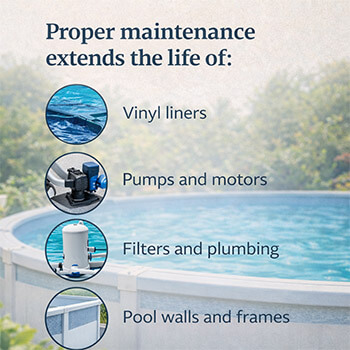 Routine care protects every component of your pool from premature wear and tear. Proper maintenance extends the life of:
● Vinyl liners
● Pumps and motors
● Filters and plumbing
● Pool walls and frames
Neglecting these tasks can significantly shorten your pool’s lifespan and lead to expensive repairs.
Following a reliable above-ground pool care routine and cleaning schedule ensures you get the most from your investment.
💧 Found a Small Liner Hole?
Watch our step-by-step video tutorial on how to patch a pool liner hole properly — including underwater repair tips and common mistakes to avoid.
👉 Watch the Full Liner Patch Tutorial on YouTube
3. Water Clarity and Enjoyment
No one wants to swim in a cloudy or green pool. Clear, inviting water is a direct reflection of proper sanitation and filtration.
A well-maintained pool enhances the entire swimming experience and helps you enjoy your backyard oasis.
Weekly Checklist: Above-Ground Pool Cleaning Schedule
A simple weekly above-ground pool cleaning schedule is the best way to prevent the most common pool problems.
Follow this section of our above-ground pool maintenance guide for year-round clarity.
1. Skim the Surface to Remove Debris
Use a pool skimmer net (see our Amazon Storefront for top-rated pool skimmer nets) daily or as needed to remove floating debris like leaves, bugs, and grass clippings.
Letting this organic matter sink to the bottom can cause stains and put extra strain on your filtration system.
2. Vacuum the Pool Floor
Vacuuming removes the fine dirt and sediment that brushing alone cannot. You can use a manual vacuum, a suction-side cleaner, or a robotic pool cleaner.
Robotic cleaners designed for above-ground pools offer automated cleaning, saving you time and effort.
Focus your vacuuming on corners, behind ladders, and along the pool floor seams where debris collects.
3. Test and Balance Your Pool Water Chemistry
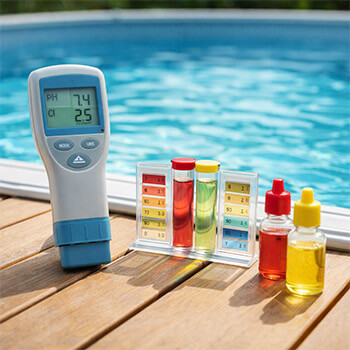 Water chemistry is the cornerstone of any guide to how to maintain an above-ground pool. Test your water at least once a week, and always after a heavy rainstorm or when many people have been swimming.
Ideal Water Chemistry Ranges:
● pH: 7.2 – 7.6
● Chlorine: 1 – 3 ppm (parts per million)
● Total Alkalinity: 80 – 120 ppm
Use a reliable test kit or digital tester to check these levels. Unbalanced water can cause cloudy water, algae blooms, and damage to your liner and equipment.
Complete Above-Ground Pool Chemical Guide
Maintaining ideal chemical levels is essential for safe, clear water and long-lasting equipment.
This dedicated above-ground pool chemicals guide will help answer common search questions like “what chemical levels for above-ground pools?” and “how much chlorine for above ground pool?”
| Chemical | Ideal Range | Purpose/Notes |
|---|---|---|
| pH | 7.2 – 7.6 | Controls water acidity; too high causes cloudy water and scale, too low irritates skin and eyes |
| Chlorine | 1 – 3 ppm | Kills bacteria and algae; too low results in green/cloudy water |
| Alkalinity | 80 – 120 ppm | Buffers pH changes; high alkalinity causes cloudy water, low causes pH swings |
| Cyanuric Acid | 30 – 50 ppm | Stabilizer that protects chlorine from sunlight |
| Calcium Hardness | 200 – 400 ppm | Prevents corrosion and scaling; too low damages surfaces, too high causes scale |
What Happens If pH Is Too High?
High pH makes chlorine less effective, causes cloudy water, and leads to scale buildup on pool surfaces and equipment. Lower pH using a pH decreaser (sodium bisulfate).
What Happens If Chlorine Is Too Low?
Low chlorine allows algae and bacteria to grow quickly. Water may turn green or look cloudy, and it’s unsafe for swimming. Raise chlorine by adding pool shock or more sanitizer.
How to Fix High Alkalinity
High alkalinity causes persistent cloudy water and makes pH difficult to adjust. To lower it, add muriatic acid or a pH decreaser, targeting the recommended range while circulating the water.
When to Shock Your Pool
Shock your pool:
● After heavy swimmer loads
● Following a rainstorm
● When free chlorine drops below 1 ppm
● If water looks cloudy or algae is present
● At pool opening and closing
Adding shock as part of your above-ground pool care routine keeps water fresh, destroys contaminants, and restores clarity.
4. Inspect and Clean the Pool Filter
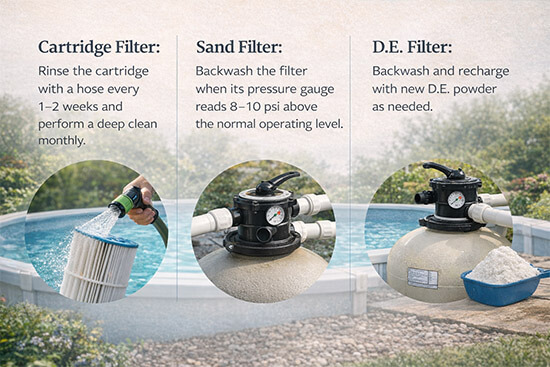
Your filter is the heart of your pool’s circulation system. A dirty or clogged filter cannot work efficiently.
● Cartridge Filter: Rinse the cartridge with a hose every 1–2 weeks and perform a deep clean monthly.
● Sand Filter: Backwash the filter when its pressure gauge reads 8–10 psi above the normal operating level.
● D.E. Filter: Backwash and recharge with new D.E. powder as needed.
Include filter cleaning as part of your regular above-ground pool maintenance guide and schedule.
Seasonal Above-Ground Pool Maintenance Guide
Beyond weekly tasks, a seasonal above-ground pool care routine is necessary to protect your pool from long-term damage, especially during the off-season.
How to Open Your Above-Ground Pool for Summer
When water temperatures consistently stay above 60°F, it’s time to open your pool and start your beginner pool maintenance guide for the season.
1. Inspect the pump, hoses, and fittings for any cracks or damage.
2. Check the liner for tears or significant wrinkles.
3. Clean and reinstall your filter components.
4. Fill the pool to the proper water level (midway up the skimmer).
5. Shock the pool to eliminate any bacteria or algae that grew over the winter.
Opening your pool early helps prevent algae from taking hold and reduces the number of chemicals you’ll need, forming the foundation for your above-ground pool chemicals guide all summer.
How to Winterize an Above-Ground Pool
In climates with freezing temperatures, properly winterizing your pool is critical, so include this in your above-ground pool care routine.
1. Lower the water level to below the return jets and skimmer.
2. Drain all water from the pump, filter, and hoses.
3. Add winterizing chemicals to protect the water and surfaces.
4. Install a secure winter cover to keep debris out.
5. Remove and store ladders, steps, and other accessories.
Skipping this process can result in cracked plumbing, a damaged liner, and costly spring repairs.
How to Reduce Above-Ground Pool Maintenance Costs
Looking to cut expenses while still enjoying a clean, safe pool? These energy and cost-saving pool maintenance tips will help you get more from your above-ground pool care routine:
● Run the Pump During Off-Peak Hours: Take advantage of lower electricity rates by operating your pool pump in the early morning or late evening.
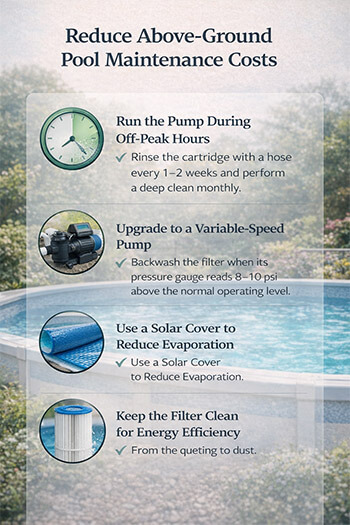 ● Upgrade to a Variable-Speed Pump: Modern variable-speed pumps use less energy than single-speed models and can significantly reduce your monthly utility bill.
● Use a Solar Cover to Reduce Evaporation: A solar cover traps heat, minimizes water loss, and reduces the need to top up water or add extra chemicals—lowering both water and chemical costs.
● Keep the Filter Clean for Energy Efficiency: A clean filter helps your pump operate efficiently, cutting down on energy consumption and extending the life of your equipment.
Implementing these strategies is a smart way to save money on pool maintenance, maximize your energy efficiency, and boost the overall value of your above-ground pool.
Looking to cut operating costs even further? Read our complete guide on how to save energy with your swimming pool to lower electricity bills and improve efficiency year-round.
Troubleshooting: How to Keep an Above-Ground Pool Clean
Even with a detailed above-ground pool maintenance guide, issues can arise. Here are some quick tips for how to keep an above-ground pool clean and clear.
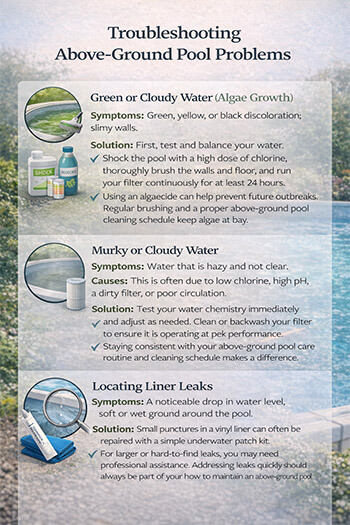
Green or Cloudy Water (Algae Growth)
 Green or Cloudy Water (Algae Growth)
● Symptoms: Green, yellow, or black discoloration; slimy walls.
● Solution: First, test and balance your water. Shock the pool with a high dose of chlorine, thoroughly brush the walls and floor, and run your filter continuously for at least 24 hours.
Using an algaecide can help prevent future outbreaks. Regular brushing and a proper above-ground pool cleaning schedule keep algae at bay.
Murky or Cloudy Water
● Symptoms: Water that is hazy and not clear.
● Causes: This is often due to low chlorine, high pH, a dirty filter, or poor circulation.
● Solution: Test your water chemistry immediately and adjust as needed. Clean or backwash your filter to ensure it is operating at peak performance. Staying consistent with your above-ground pool care routine and cleaning schedule makes a difference.
Locating Liner Leaks
● Symptoms: A noticeable drop in water level, soft or wet ground around the pool.
● Solution: Small punctures in a vinyl liner can often be repaired with a simple underwater patch kit. For larger or hard-to-find leaks, you may need professional assistance. Addressing leaks quickly should always be part of your how to maintain an above-ground pool plan.
For a step-by-step breakdown of professional leak detection methods, see our article on finding and fixing swimming pool leaks.
Evaporation vs. Leak: How to Tell the Difference
It’s normal for pools to lose about ¼ to ½ inch of water per day to evaporation during hot summer weather. If your water loss consistently exceeds this amount, you may have a leak. Always compare your water level drop to the average evaporation rate before starting leak detection—this helps you avoid unnecessary repairs and keeps your above-ground pool maintenance focused on what matters.
Many pool owners—even the experienced—make small mistakes that can lead to bigger problems down the road.
Avoid these common missteps for a healthier, longer-lasting pool:
● Running the pump too little: Insufficient circulation allows debris and algae to build up.
● Ignoring filter pressure: High or low pressure can signal clogs or flow problems that need prompt attention.
● Not brushing walls: Skipping this lets algae and dirt accumulate on pool surfaces.
● Adding chemicals without testing: Guesswork can throw off your water balance and waste money on unnecessary chemicals.
● Waiting too long to fix leaks: Small leaks can quickly become costly issues if not addressed right away.
💧 Think You Might Have a Pool Leak?
Don’t guess — test it properly.
Download our FREE step-by-step guide and learn:
● How to perform the 24-hour water loss test
● How to tell evaporation from a real leak
● The most common leak locations pool owners miss
● When DIY testing is enough — and when to call a pro
👉 Download the Free Pool Leak Detection Ebook Now
Essential Above-Ground Pool Maintenance Tools
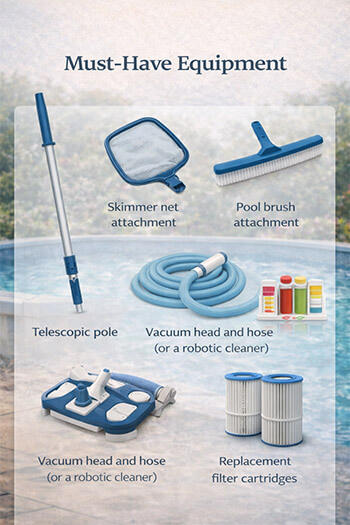 Having the right pool maintenance tools makes the job much easier and more effective.
Must-Have Equipment:
● Telescopic pole
● Skimmer net attachment
● Pool brush attachment
● Vacuum head and hose (or a robotic cleaner)
● Reliable water test kit
● Replacement filter cartridges (if applicable)
Investing in quality equipment and following a smart above-ground pool maintenance guide simplifies your life and helps you get the cleanest pool possible.
Recommended Tools for Easier Maintenance
Choosing the right tools can make above-ground pool maintenance faster and far more effective. Explore the best options for every skill level and budget below.
Beginner Setup Kit
Start strong with all the essentials you need for a clean, healthy pool:
● Pool skimmer net
● Telescopic pole
● Pool brush
● Reliable test kit
● Manual vacuum
Budget-Friendly Tools
Maximize results without breaking the bank by upgrading to affordable, easy-to-use tools:
● Suction-side pool cleaner
● Multi-purpose pool brush
● Long-lasting filter cartridges
● Accurate digital water tester
Premium Automation Tools
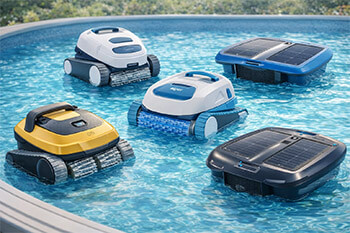 Take convenience to the next level with advanced solutions for effortless cleaning:
● Robotic pool cleaner
● Programmable smart pump
● Automatic chlorinator
Invest in premium automation for the ultimate hands-off maintenance experience. Upgrade to pro-level gear today!
Frequently Asked Questions (FAQ): Above-Ground Pool Maintenance Guide
Q: How often should I follow my above-ground pool cleaning schedule?
A: You should run your pool pump for at least 8-12 hours per day and stick to your weekly above-ground pool cleaning schedule for best results. Consistency is the key to keeping your pool clean and clear.
Q: What is the best way to prevent algae in an above-ground pool?
A: The best defense against algae is maintaining consistent chlorine levels (1-3 ppm) and pH (7.2-7.6) as described in this above-ground pool chemicals guide. Regular brushing and preventative algaecide also protect your pool.
Q: Can I use a robotic cleaner for an above-ground pool?
A: Yes! Many robotic pool cleaners are specifically designed for above-ground pools. They support your how to maintain an above-ground pool routine by providing thorough, automated cleaning for the floor and walls.
Q: How do I keep an above-ground pool clean without a vacuum?
A: While a vacuum helps, you can keep an above-ground pool clean by skimming daily, brushing as part of your care routine, and keeping your filter running efficiently.
Q: Is there a beginner pool maintenance guide for first-time owners?
A: Yes, this article serves as a beginner pool maintenance guide and resources like step-by-step checklists and our video course can help simplify above-ground pool maintenance for new owners.
Q: How long does an above-ground pool liner last?
A: Most above-ground pool liners last 5–10 years depending on water chemistry, maintenance, and sun exposure. Protective steps like regular cleaning, maintaining chemical balance, and using a pool cover can extend the liner’s lifespan significantly.
Q: Why is my above-ground pool losing water?
A: Common causes include evaporation, splash-out, or leaks in the liner or plumbing. To check for leaks, monitor the water level and inspect the liner, hoses, and fittings for wet spots or damage.
Q: How often should I shock an above-ground pool?
A: You should shock your above-ground pool every 1–2 weeks, or after heavy use, storms, or when pool water appears cloudy or green. Shocking helps eliminate contaminants and restores sparkling water.
Q: Can rain affect pool chemistry?
A: Yes, rain can dilute pool chemicals, lower pH, and introduce debris or contaminants. Test your water after a heavy rain and adjust chemical levels as needed to maintain a balanced pool.
Q: Should I cover my above-ground pool every night?
A: Covering your pool nightly helps reduce debris, heat loss, evaporation, and chemical usage. Using a cover can minimize cleaning tasks and help maintain balanced water chemistry.