
How to Save Energy with Your Swimming Pool: A Complete Guide
Owning a swimming pool feels like the ultimate luxury until the utility bill arrives. Pools are often one of the biggest energy consumers in a household, sometimes rivaling the air conditioner during peak summer months.
But high operating costs aren’t mandatory for pool ownership.
Smart energy management can dramatically lower electricity bills, extend your equipment’s lifespan, and make your pool more sustainable.
 Efficiency doesn’t mean sacrificing comfort; it means running your pool intelligently so it performs better while consuming less power.
In this guide, we will explore practical, proven strategies to cut costs and improve performance. Whether you are installing a new pool or retrofitting an existing one, these tips will help you swim smarter.
Quick Ways to Save Energy in Your Pool
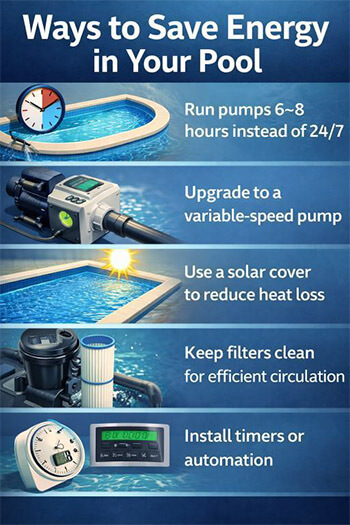
- Run pumps 6-8 hours instead of 24/7
- Upgrade to a variable-speed pump
- Use a solar cover to reduce heat loss
- Keep filters clean for efficient circulation
- Install timers or automation
Why Pool Energy Efficiency Matters (and How It Saves Money)
Before understanding the “how,” let’s look at the “why.” Saving energy isn’t just about cutting monthly bills—though that’s a big bonus.
Extend Your Swimming Season
An energy-efficient pool system retains heat and moves water effectively, keeping temperatures comfortable longer without increasing heating costs.
Reduce Environmental Impact
Pools use a lot of resources. Reducing energy consumption lowers your carbon footprint and eases demand on the power grid.
Increase Equipment Lifespan
Efficient pumps, filters, and heaters experience less strain, reducing wear and tear. This means fewer breakdowns, lower repair costs, and longer-lasting equipment.
Boost Property Value
Energy-efficient pools appeal to homebuyers. A pool that’s cheap to operate is a strong selling point, easing fears of high costs and adding value to your home.
👉 Everything you need in one place — check out our Amazon storefront for essential pool maintenance gear.
How to Optimize Pool Circulation for Maximum Energy Savings
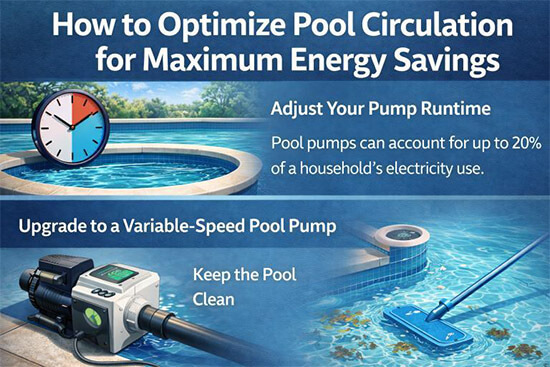
The heart of your pool’s energy consumption is the circulation system. Proper water movement keeps your pool clean and chemically balanced, but it doesn’t need to run 24/7 at full power.
Adjust Your Pump Runtime
One of the most common myths is that pool pumps must run continuously. For most residential pools, this is overkill.
- The Fix: Run your filtration system for about 6-8 hours daily during the swim season.
- The Strategy: Schedule runtimes during off-peak hours when electricity rates are often lower. Adjust this schedule based on usage; heavy swimmer loads require more filtration, while an unused pool needs less.
Pool pumps can account for up to 20% of a household’s electricity use.
Upgrade to a Variable-Speed Pool Pump
If you are still using a single-speed pump, you are likely wasting money. Single-speed pumps run at full power regardless of the task.
- The Upgrade: Variable-speed pumps allow you to dial in the exact flow rate You can run them at a low speed for basic filtration and ramp them up only when vacuuming or running water features.
- The Savings: Energy Star reports that variable-speed pumps can save up to 70–80% on energy costs, often paying for themselves in under two years.
Many pool owners cut operating costs dramatically after switching — here’s how variable-speed pumps reduce pool energy consumption.
Keep the Pool Clean
Debris is an energy thief. Clogged skimmer baskets, pump baskets, and filters force your pump to work harder to move the same amount of water.
Routine Maintenance: Empty baskets weekly. Backwash sand or DE filters only when pressure rises 8-10 PSI above clean readings. Frequent backwashing wastes heated, chemically treated water.
Reducing Heat Loss and Heating Costs
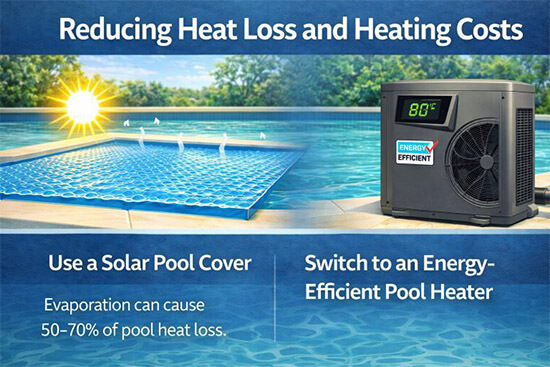
Heating a large body of water takes a tremendous amount of energy. Keeping that heat inside the pool is the secret to efficiency.
Use a Solar Pool Cover
Evaporation is the single largest source of energy loss in swimming pools. As water evaporates, it takes heat with it.
Evaporation can cause 50–70% of pool heat loss.
- The Solution: A solar cover (or bubble blanket) acts as a vapor barrier.
- The Benefit: Using a cover can reduce heat loss by up to 75%. It also reduces the amount of makeup water needed and lowers chemical consumption since fewer chemicals evaporate with the water.
Using a solar cover can cut heating costs significantly. Here’s a breakdown of how pool solar covers save energy and money.
Switch to an Energy-Efficient Pool Heater
Traditional gas heaters are powerful but can be inefficient for maintaining daily temperature.
- Heat Pumps: These capture heat from the surrounding air and transfer it to the water. They are far more efficient than gas heaters for maintaining steady temperatures, especially in climates where the air temperature remains above 50°F (10°C).
- Solar Heaters: Installing solar panels specifically for your pool is the most eco-friendly They use your existing pump to circulate water through solar collectors, heating it for free using the sun’s energy.
👉 Discover how energy-efficient pool heat pumps lower heating costs and extend swim season
Smart Filtration and Automation
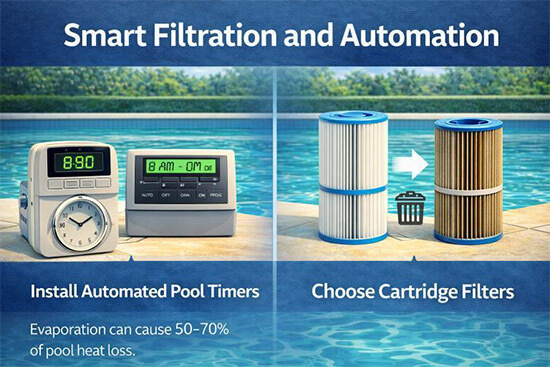
Modern technology offers excellent ways to remove human error from pool maintenance.
Install Automated Pool Timers
Timers eliminate guesswork. Without them, it is easy to turn a pump on, forget about it, and let it run for 24 hours straight.
- Smart Automation: Modern systems connect to your smartphone, allowing you to control pumps, lights, and heaters This ensures equipment runs only when necessary.
Smart scheduling can lower electricity costs — here’s how pool timers save energy and protect equipment.
Choose Cartridge Filters
Sand filters are common, but they create more resistance (or “head”) in the plumbing system than cartridge filters.
- Flow Efficiency: Cartridge filters generally allow water to flow more freely, which reduces the workload on your pump. They also don’t require backwashing, saving thousands of gallons of heated water every season.
What Real Pool Energy Savings Look Like
A homeowner switching to a variable-speed pump and using a solar cover may reduce annual operating costs by hundreds of dollars — sometimes more depending on climate and usage.
Common Energy Mistakes Pool Owners Make (and How to Avoid Them)
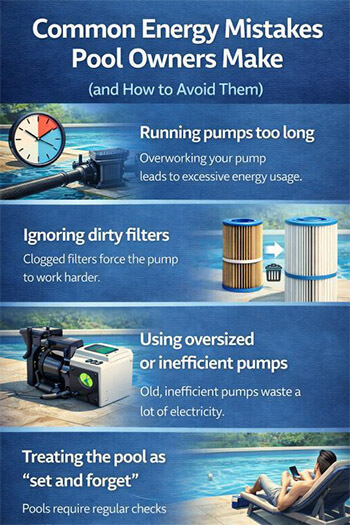 Many pool owners unknowingly waste energy through small habits that strain equipment and raise operating costs. The most common issues — and smarter fixes — include:
🚫Running pumps too long
→ Most pools only need 6–8 hours of circulation daily; longer runtimes waste electricity and accelerate wear.
🚫Ignoring dirty filters → Clogged filters restrict flow, forcing pumps to work harder and consume more energy.
🚫Ignoring dirty filters → Evaporation causes major heat loss; using a cover dramatically reduces reheating costs.
🚫Using oversized or inefficient pumps → Larger or single-speed pumps draw unnecessary power; variable-speed pumps improve efficiency.
🚫Treating the pool as “set and forget” → Seasonal adjustments to runtime and heating prevent year-round energy waste.
Correcting these habits lowers electricity use, protects equipment, improves circulation, and keeps your pool running efficiently with less effort.
👉 Free Ebook: How to Find a Pool Leak — Detect Problems Before They Get Expensive
 A hidden pool leak can waste thousands of gallons of water, drive up chemical costs, and quietly damage your equipment or structure.
The longer it goes unnoticed, the more expensive it becomes.
Our free step-by-step ebook shows you how to test for leaks, measure water loss, find common failure points, and decide when to call a pro.
These homeowner-friendly methods will help you catch small leaks before they become major repairs.
👉 Download your free guide now and learn how to catch a pool leak early.
Conclusion
Energy-efficient pool ownership isn’t about cutting corners—it’s about smarter operation.
By optimizing your pump speed, covering the pool to prevent evaporation, and keeping equipment clean, you create a system that costs less and lasts longer.
Even small improvements, like installing a timer or using a solar cover, compound into meaningful savings over time. Start with one upgrade today and enjoy a more sustainable swim tomorrow.
Frequently Asked Questions (FAQs)
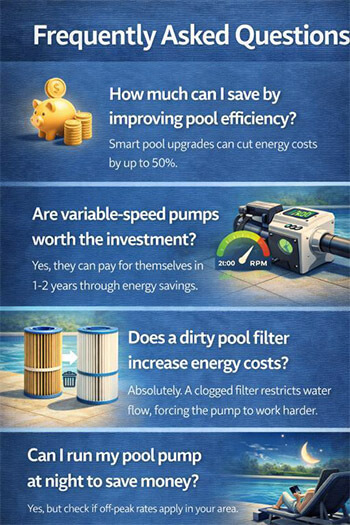
 How much can I save by improving pool efficiency?
 How much can I save by improving pool efficiency?
Savings vary by pool size and climate, but many owners report 30–50% reductions in energy costs after switching to variable-speed pumps and using solar covers.
Are variable-speed pumps worth the investment?
Yes. While the upfront cost is higher, the energy savings usually pay for the pump within two years. They are also significantly quieter than single-speed pumps.
Does a dirty pool filter increase energy costs?
Absolutely. As dirt accumulates, it resists water flow. The pump must work harder to push water through the debris, consuming more electricity to achieve the same circulation turnover.
Can I run my pool pump at night to save money?
Yes. In many areas, electricity rates are lower during off-peak hours (often at night). However, ensure you still run the pump enough to distribute chemicals effectively, especially after adding chlorine.