

Solar Pool Covers: Do They Really Work? Costs, Savings & Buyer Guide (2026)
Owning a swimming pool should be a joy, not a constant drain on your wallet. Between evaporation, heat loss, and rising utility bills, the costs can add up quickly.
A solar pool cover, also known as a solar blanket, offers a simple and powerful solution. It harnesses free energy from the sun to reduce heating costs, conserve water, and minimize chemical use.
This guide will walk you through everything you need to know. We’ll explore the many solar pool cover benefits, how to choose the right one, and what kind of return on investment you can expect.
If you want to lower your pool’s operating costs, this is essential reading.
What Is a Solar Pool Cover?
A solar pool cover is a sheet of UV-resistant material, usually polyethylene, filled with thousands of small air bubbles. These bubbles are key to its function:
● They capture and magnify solar radiation.
● They transfer that trapped heat directly into your pool water.
● They create an insulating barrier that dramatically reduces evaporation.
● They help maintain a stable temperature, especially overnight.
Think of it as a passive solar heater and an evaporation shield all in one. It’s one of the most effective pool heat retention methods available.
Do Solar Pool Covers Really Work?
Yes, absolutely. For pool owners asking, “do solar pool covers really work?” The answer is a resounding yes, backed by data.
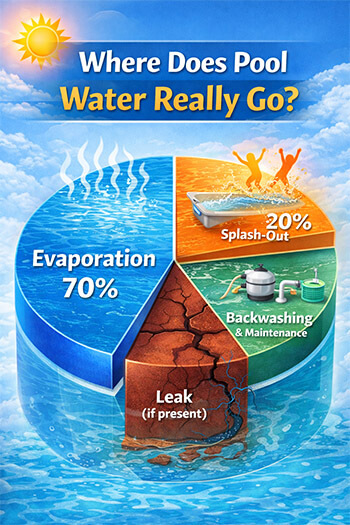
Their effectiveness comes from tackling the two biggest sources of heat loss: evaporation and overnight temperature drops.
Evaporation is the single largest cause of heat loss, responsible for up to 70% of the energy your pool sheds.
A properly fitted solar cover can cut this evaporation by 95%.
This massive pool evaporation reduction not only saves water but also locks in the warmth that would otherwise escape into the air.
Furthermore, the insulating bubbles prevent radiant heat loss when the sun goes down.
This means your pool heater runs less, and the water stays comfortably warm for your next swim.
The consistent performance makes it a reliable way to maintain your pool’s temperature without constant energy consumption.
Key Benefits of Using a Solar Pool Cover
1. Significant Solar Pool Cover Temperature Increase
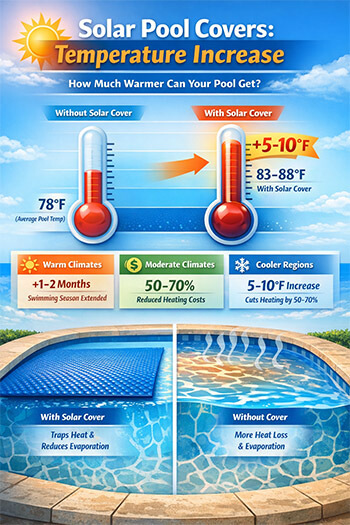
A primary benefit is the noticeable solar pool cover temperature increase.
Depending on your climate and how much direct sunlight your pool gets, a cover can raise the water temperature by 5–10°F.
● Warm Climates: You can extend your swimming season by a month or more.
● Moderate Climates: Your reliance on a gas or electric heater is greatly reduced.
● Cooler Regions: You can see heating cost reductions of 50–70%.
For many, this is the best answer for how to keep a pool warm without a heater, or at least to dramatically reduce heater runtime.
2. Drastic Reduction in Water Evaporation
Water loss from evaporation is a constant issue. In hot and dry areas, a pool can lose a quarter-inch of water or more every day. A solar cover stops this process, leading to:
● Lower water bills from less refilling.
● More stable water chemistry, as chemicals aren’t being diluted.
● Conservation of hundreds of gallons of water each week.
⚠️Not sure if your water loss is evaporation or a leak? Download our free Pool Leak Detection Guide and learn how to test it properly

3. Lower Energy and Heating Costs
Pool heaters consume a large amount of energy. A solar blanket directly combats this by:
● Maintaining the water temperature overnight.
● Reducing the total hours your heater needs to run.
● Minimizing the energy spikes needed to bring cold water up to temperature.
This can result in annual savings of $100 to $500 or more, depending on your heater type and local climate.
4. Reduced Chemical Consumption
When water evaporates, the chemicals in it become more concentrated, and chlorine can be broken down by UV rays. By limiting evaporation, a solar cover:
● Lowers your pool’s chlorine demand.
● Helps keep the pH and alkalinity levels stable.
● Reduces the frequency of needing to shock the pool.
This translates directly to savings on sanitizers, balancers, and other chemicals.
5. Keeps Debris Out of the Pool
The cover acts as a physical barrier, preventing leaves, insects, and dirt from entering the water.
This means less time skimming, reduced strain on your filter and pump, and clearer water overall.
Maximize Energy Savings & Automation
If you’re investing in a solar pool cover, the next logical upgrade is a solar-powered skimmer.
✔ Runs on solar energy
✔ Reduces pump runtime
✔ Improves water clarity
✔ Cuts maintenance time
👉 Read The Ultimate Guide to Solar Pool Skimmers
How to Choose the Best Solar Pool Cover
Finding the best solar pool cover depends on your specific needs, pool type, and climate.
Consider these three factors.
1. Pool Shape and Size
Solar covers are made for all pool types. They are easy to trim with scissors to perfectly fit rectangular, kidney-shaped, freeform, or even a solar blanket for above ground pool setups. For maximum efficiency, ensure there are minimal gaps around the edges.
2. Thickness (Mil)
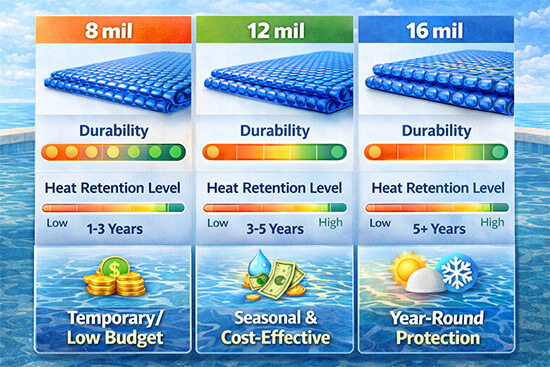
Thickness, measured in mils, affects durability and insulation.
● 8 mil: A budget-friendly option with a shorter lifespan.
● 12 mil: The most popular choice, offering a good balance of durability and heat retention.
● 16 mil: Provides maximum insulation and longevity, ideal for cooler climates.
3. Color
Color influences how the cover absorbs and retains heat.
● Clear: Allows the most solar energy to penetrate, resulting in the fastest heating.
● Blue: Offers a good balance between heating the water and retaining that heat.
● Black/Dark: Absorbs the most heat, making it great for retention, especially in colder regions.
Installation and Best Practices
Using your solar cover correctly will extend its life and maximize its effectiveness.
1. Place the cover on the water with the bubble side facing down.
2. Carefully trim it to match the shape of your pool.
3. Always remove the cover before swimming.
4. When not in use, store it on a reel or in a shaded area to prevent UV damage.
Using a solar cover reel system is highly recommended. It makes deployment and removal much easier and prevents the tearing and damage that can happen from dragging it across a pool deck.
Return on Investment (ROI)
| Upgrade | Average Cost | Annual Savings | ROI Time |
| Solar Pool Cover | $75–$300 | $100–$500 | 1 season |
| Gas Heater | $2,000–$4,000 | – | Ongoing cost |
| Heat Pump | $2,500–$5,000 | Moderate | 3–5 years |
● Average Cost: $75–$300, depending on size and thickness.
● Typical Payback Period: Often just one swimming season.
The savings come from multiple sources: reduced heating bills, lower water usage, and fewer chemical purchases. Very few pool upgrades offer such a clear and rapid financial return.
Real-World Performance Data
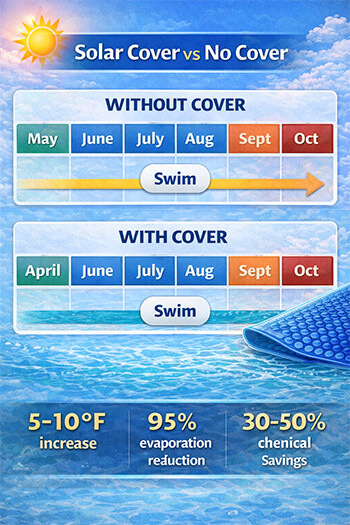
● Evaporation reduction: up to 95%
● Heat loss reduction: 50–70%
● Chemical savings: 30–50% in high-evaporation climates
● Average ROI: 3–12 months
● Average Cost: $75–$300, depending on size and thickness.
● Typical Payback Period: Often just one swimming season.
The savings come from multiple sources: reduced heating bills, lower water usage, and fewer chemical purchases. Very few pool upgrades offer such a clear and rapid financial return.
Above-Ground Pool Considerations
If you own an above-ground pool, there are a few unique considerations for choosing and using a solar pool cover or solar blanket for above ground pool setups:
● Lighter Weight Covers Recommended: Above-ground pools generally benefit from lighter solar covers, as they are easier to handle, trim to size, and manage during placement and storage.
● Wind Protection Strategies: Because above-ground pools are more exposed to the wind, using wind straps, clips, or weighted edges can help keep the cover securely in place and prevent it from blowing away.
● Reel Options: There are specialized solar cover reel systems designed specifically for above-ground pools. These can simplify rolling and unrolling the cover, protect against damage, and extend the cover’s lifespan.
By keeping these tips in mind, you can maximize your efficiency, savings, and convenience with a solar blanket for above ground pool use.
Common Mistakes to Avoid
❌ Leaving large gaps around the pool’s edge.
❌ Choosing a cover that is too thin for your climate.
❌ Not using a reel, which can cause premature wear and tear.
❌ Mistaking it for a safety cover—it is NOT a safety device.
❌ Storing it in direct sunlight when it’s off the pool.
New to Pool Ownership?
If you’re still learning the fundamentals of pool maintenance, water chemistry, equipment, and seasonal care, start here:
✔ Maintenance basics
✔ Water balance explained
✔ Equipment troubleshooting
✔ Cost-saving tips
👉 Read: Top 30 Swimming Pool FAQ – Your Complete Guide for New Pool Owners
Using a Solar Cover for Leak Testing
Solar covers aren’t just for saving energy—they can also be a powerful tool in diagnosing pool leaks. Because evaporation is often mistaken for a leak, isolating these variables can save you time, money, and unnecessary repairs.
Here’s how to use your cover for evaporation diagnostics:
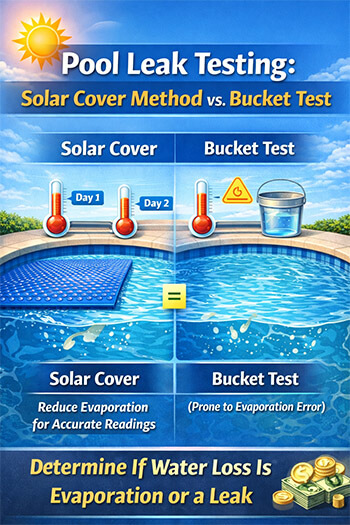
1. Measure water loss over 24 hours without a cover. Mark your water level and track how much it drops.
2. Install the solar pool cover and leave it in place for the next 24-hour period.
3. Measure water loss again. Compare the results with and without the cover.
A significant reduction in water loss with the cover on indicates that evaporation—not a structural leak—is the main culprit.
If water loss remains similar, you may have an actual leak that needs attention.
For more detailed testing, consider the bucket test, which helps further distinguish between leaks and evaporation.
Check out our full article on the bucket test, or download our free ebook for thorough, step-by-step guidance.
Expert Insight
With years of hands-on experience in pool diagnostics, I’ve seen firsthand how often evaporation gets misidentified as a leak.
Using a solar pool cover and conducting proper water loss tests makes it much easier to separate normal evaporation from real structural leaks.
This not only saves homeowners money but also streamlines the repair process—ensuring you only invest in solutions you genuinely need.
Frequently Asked Questions

How much of a temperature increase can I expect?
Typically 5–10°F, depending on sun exposure and local climate.
Will it stop evaporation completely?
It will stop up to 95% of evaporation, which is a massive reduction.
Does it work without a heater?
Yes. It excels at capturing and retaining natural heat from the sun, even without a mechanical heater.
Can it help me find a pool leak?
Yes. By nearly eliminating evaporation as a cause of water loss, a cover helps you determine if you have a structural leak.
How long do solar pool covers last?
Most solar pool covers last between 3 and 5 years, depending on the thickness and how well they’re cared for.
Should bubbles face up or down?
The bubbles should face down, touching the water. This maximizes heat transfer and insulation.
Can I leave my solar cover on all the time?
You can leave the cover on when the pool is not in use, but always remove it before swimming and periodically allow the pool to breathe to prevent chemical buildup.
Do solar pool covers cause algae?
Using a solar cover does not cause algae, but warm water and trapped debris can encourage growth if pool chemistry isn’t properly maintained.
Can you shock a pool with the cover on?
No. Always remove the cover before shocking your pool. High chemical levels can damage the cover and reduce its lifespan.
Yes. By nearly eliminating evaporation as a cause of water loss, a cover helps you determine if you have a structural leak.
Chris Ilias, Owner of Pool Leak Detection LLC, specializes in underground and underwater leak detection. With expertise developed over years in the field, Chris helps pool owners accurately diagnose and resolve water loss issues with confidence.
Stay Connected for More Pool Tips
Follow us for expert advice on pool maintenance, leak detection, and backyard safety.
● YouTube: Pool Leak Detection LLC
● Instagram: @poolleakdetectionllc
● Facebook: Pool Leak Detection LLC
● Pinterest: Pool Leak Detection LLC
● LinkedIn: Chris Ilias