

A Comprehensive Guide to Pool Timers: Save Energy, Automate Maintenance & Extend Equipment Life
Owning a swimming pool is a luxury, but efficient maintenance is key to keeping it affordable. Pumps, filters, and circulation systems can consume significant electricity if left unmanaged. That’s why installing a pool timer is one of the smartest upgrades for any pool owner.
A well-configured pool pump timer reduces energy costs, automates daily operations, and extends the lifespan of your pool equipment. Whether you’re a new pool owner or a seasoned DIY caretaker, this guide will walk you through everything you need to know about pool timers.
If you’re new to pool ownership and want a broader foundation, be sure to read our Top 30 Swimming Pool FAQ: Your Complete Guide for New Pool Owners for answers to the most common pool maintenance questions.
 What You’ll Learn:
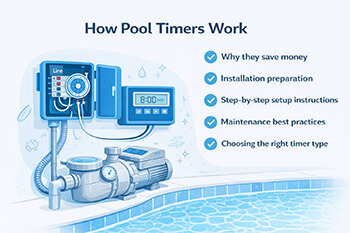 What You’ll Learn:
- How pool timers work
- Why they save money
- Installation preparation
- Step-by-step setup instructions
- Maintenance best practices
- Choosing the right timer type
By the end, you’ll know how to streamline pool care, save energy, and maximize your pool system’s efficiency and lifespan.
👉 Ready to upgrade? Explore our top-recommended pool timers to find the perfect match for your setup.
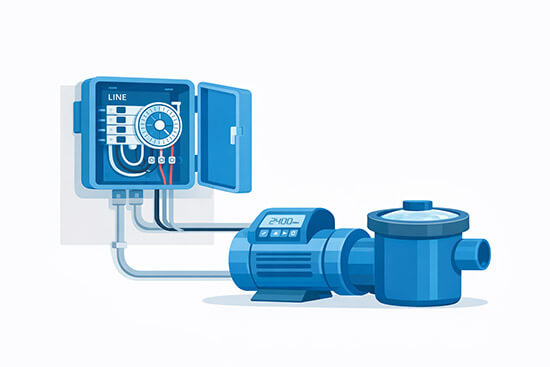
What a Pool Timer Does?
- line/load power switching
- scheduling cycles
- interaction with pumps
- basic electrical logic
Why Every Pool Owner Needs a Pool Timer
A pool timer may seem like a simple device, but it delivers significant benefits for your pool system and your monthly utility bill.
Pool Timer Benefits at a Glance
✔ Lower energy bills
✔ Automated filtration
✔ Longer equipment lifespan
✔ Consistent circulation
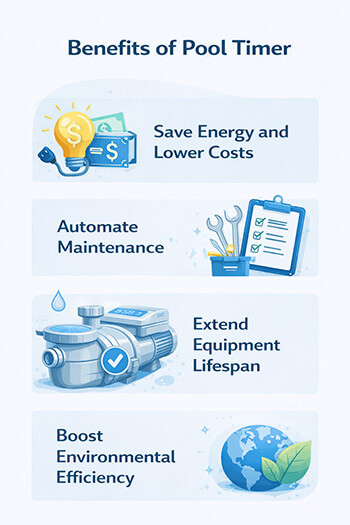
1. Save Energy and Lower Costs
Pool pumps are among the highest energy consumers in most homes. Running them continuously wastes electricity and money. A pool timer ensures your pump operates only during optimal circulation windows, leading to:
- Lower electricity bills
- Reduced strain on your system
- More efficient filtration
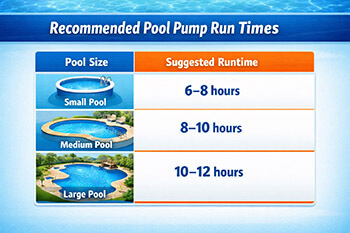
Most pools only require 6–12 hours of circulation daily, depending on their size and environment.
Many homeowners reduce pump energy use by 30–50% when properly scheduling runtime.
For more practical strategies beyond timers, check out our guide on 8 tips to save energy and money for your swimming pool to further reduce operating costs year-round.
 2. Automate Maintenance
 2. Automate Maintenance
Manually operating your pool pump can be easy to forget, especially during busy schedules or vacations. A timer automates your filtration cycle, ensuring:
- Consistent water circulation
- Reduced algae growth
- Hands-off maintenance Automation keeps your pool healthier with minimal
3. Extend Equipment Lifespan
Continuous operation accelerates wear and tear on your pool pump. By controlling runtime, a timer:
- Reduces heat buildup
- Limits mechanical stress
- Extends the lifespan of your pump
This can delay costly repairs or replacements.
4. Boost Environmental Efficiency
Lower energy consumption means a smaller environmental footprint. An optimized pool system uses fewer resources while maintaining water clarity and sanitation.
Types of Pool Timers: Which One is Right for You?
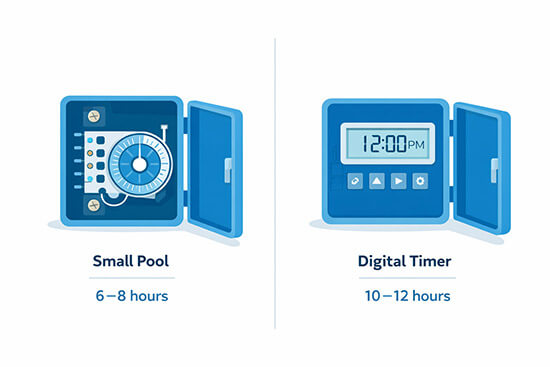
Not all pool timers are created equal. Choosing the right one depends on your pool setup and personal preferences.
Mechanical Pool Timers
- Simple dial-based scheduling
- Durable and budget-friendly
- Ideal for straightforward pump control
These timers are reliable and easy to troubleshoot, making them a popular choice for traditional setups.
Digital Pool Timers
- Advanced programmable schedules
- Smart home compatibility
- Remote access options
- Energy tracking features
Digital timers are perfect for homeowners who want precision control and automation flexibility.
Pre-Installation Checklist: Prepare for Safe Setup
Important: Pool equipment wiring involves electricity. If you’re unsure about electrical safety, consult a licensed professional.
Tools & Materials:
- Screwdriver
- Wire strippers
- Wire connectors
- Pool timer unit
Safety Essentials:
- Insulated gloves
- Dry workspace
- Power isolation
Installation Prep Steps:
✔ Shut off power at the breaker
✔ Choose a dry, protected mounting location
✔ Confirm voltage compatibility with your pump
Proper preparation minimizes mistakes and ensures a successful installation.
Step-by-Step Pool Timer Installation Guide
Always follow the manufacturer’s wiring diagram, as configurations may vary.
If you are unfamiliar with electrical wiring, consult a licensed electrician. Incorrect installation can damage equipment or pose safety risks.
1. Mount the Timer Housing
Secure the timer to a stable surface near your pool equipment. Ensure it’s level and protected from water exposure.
2. Connect Power and Load Wires
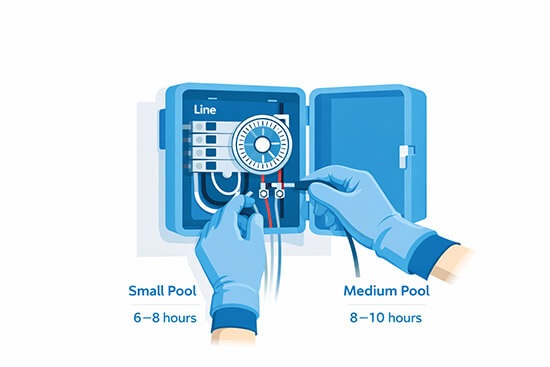
- Connect incoming power to the Line
- Connect pump wiring to the Load
- Double-check polarity and tighten all
3. Set the Current Time
 3. Set the Current Time
Align the timer dial or digital clock with the real time.
4. Program Operating Cycles
Most pools benefit from split cycles, such as:
- Morning filtration
- Afternoon circulation
Adjust the schedule based on your pool’s usage and climate.
5. Restore Power and Test
Turn the power back on and confirm the timer activates the pump correctly. Secure all covers to protect internal components.
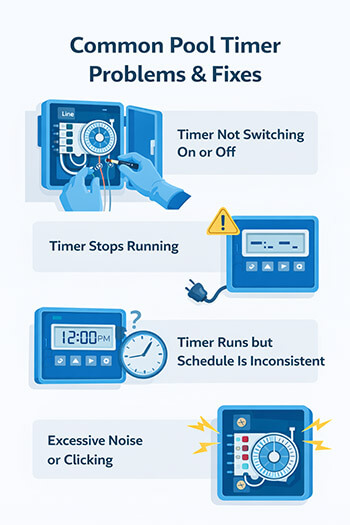
Common Pool Timer Problems & Fixes
Even reliable pool timers can develop small issues over time. Most problems are simple to diagnose and correct if caught early.
Timer Not Switching On or Off
If the pump doesn’t activate or shut off at the scheduled time, the timer mechanism may not be engaging properly.
What to check:
- Worn or loose trippers/pins
- Incorrect time alignment
- Dial obstruction or debris
Replace damaged trippers and confirm the clock dial matches the current time.
Not sure if your water loss is evaporation or a leak?
Our Free Ebook: How to Find Pool Leaks walks you through simple DIY tests, common leak locations, and when to call a professional.
👉 Download Your Free Copy Today

Pump Stays On Continuously
When the pump runs nonstop, the timer may be bypassed or wired incorrectly.
What to check:
- Loose or miswired Line/Load connections
- Manual override switch position
- Internal relay wear
Turn off power before inspecting wiring. If unsure, consult a professional.
Timer Stops Running
A timer that suddenly stops usually indicates a power or mechanical issue.
What to check:
- Circuit breaker status
- Power supply connections
- Internal motor function
If the dial no longer advances, the timer motor may need replacement.
Timer Runs but Schedule Is Inconsistent
 Timer Runs but Schedule Is Inconsistent
If cycles trigger at the wrong times, scheduling may have shifted.
What to check:
- Daylight savings or power interruption reset
- Loose time dial
- Programming errors
Re-align the clock and verify On/Off settings.
Excessive Noise or Clicking
Some clicking is normal, but loud or irregular noise may indicate wear.
What to check:
- Mounting stability
- Internal component wear
- Debris inside the housing
Secure mounting hardware and clean the enclosure.
When to Call a Professional
If troubleshooting doesn’t resolve the issue — or if electrical wiring appears damaged — stop using the timer and contact a qualified technician. Electrical faults can damage equipment or create safety hazards.
Maintaining Your Pool Timer for Long-Term Reliability
Timers are low-maintenance, but routine checks ensure consistent operation.
Inspect Connections
Every few months:
- Check for loose wires
- Remove debris
- Look for corrosion
Early detection prevents electrical issues.
Seasonal Adjustments
- Summer: Increase circulation periods to handle higher debris
- Winter: Reduce runtime to conserve
Reset After Interruptions
Power outages or daylight savings changes may require reprogramming.
Address Problems Promptly
If the timer behaves erratically:
- Verify wiring
- Check trippers or programming
- Consult the manual
For persistent issues, contact a professional.
Optimizing Pump Runtime for Maximum Efficiency
A timer is only effective when programmed correctly. Ideal runtime depends on:
- Pool volume
- Pump horsepower
- Climate
- Debris exposure
General Guideline: Aim to circulate your pool’s total water volume once per day. Overscheduling wastes energy, while under scheduling affects water sanitation.
Pool Timer vs. Variable-Speed Pump: What’s the Difference?
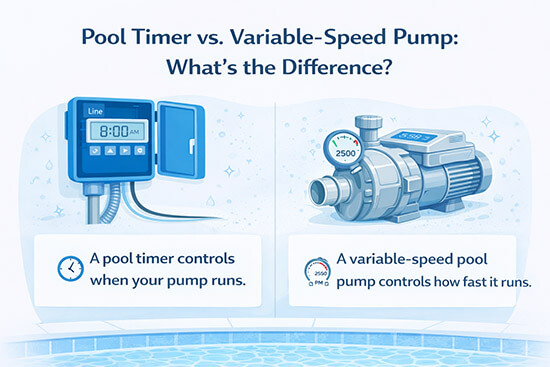
A pool timer controls when your pump runs.
A variable-speed pool pump controls how fast it runs.
A timer automates scheduling, ensuring your system runs only during necessary circulation windows. A variable-speed pump, on the other hand, adjusts motor speed to optimize flow rate and dramatically reduce energy consumption.
When combined, these two upgrades deliver maximum energy efficiency, lower operating costs, quieter performance, and extended equipment lifespan.
👉 Want to understand how variable-speed technology can cut your electric bill?
Read our complete guide to variable-speed pool pumps.
Make Pool Maintenance Even Easier
A pool timer is a foundational upgrade, but it’s just one part of a comprehensive maintenance strategy. Advanced pool owners can benefit from learning about:
- Seasonal pool preparation
- Filtration optimization
- Leak detection basics
- Equipment troubleshooting
Final Thoughts: Small Upgrade, Big Impact
Installing a pool timer is one of the simplest, highest-ROI improvements you can make for your pool system. You’ll enjoy:
✔ Lower energy bills
✔ Automated maintenance
✔ Extended equipment life
✔ Environmental efficiency
With minimal investment, you can dramatically improve your pool management.
👉 Upgrade your pool routine today — your equipment, wallet, and future self will thank you.
Frequently Asked Questions About Pool Timers

How long should I run my pool pump with a timer?
Most residential pools need 6–12 hours of circulation per day, depending on pool size, climate, and debris exposure. The goal is to circulate the pool’s total water volume at least once daily.
Smaller pools often require less runtime, while larger or heavily used pools may need longer cycles — especially during hot summer months.
Can a pool timer really save electricity?
Yes. A pool timer prevents your pump from running longer than necessary. Since pool pumps are one of the largest energy users in many homes, optimizing runtime can significantly reduce electricity consumption.
Many homeowners see noticeable savings when switching from continuous operation to a scheduled cycle.
Are digital pool timers better than mechanical timers?
Not necessarily — they serve different needs.
Mechanical timers are durable, simple, and reliable for basic scheduling. Digital timers offer advanced programming, smart features, and remote control options. The best choice depends on how much customization and automation you want.
Can I install a pool timer myself?
Many homeowners with basic electrical knowledge can install a pool timer by following manufacturer instructions. However, pool equipment wiring involves high voltage.
If you’re unsure about safe electrical practices, hiring a licensed electrician is strongly recommended to avoid damage or injury.
What happens if my pool timer stops working?
A failed timer may cause the pump to stay on continuously or not run at all. Common causes include worn trippers, loose wiring, or power supply issues.
Inspect connections and settings first. If problems persist, consult the manual or a professional technician.
Should I run my pool pump during the day or at night?
Either can work. Running during the day helps filtration when debris is most active, while nighttime operation may reduce energy costs in areas with off-peak electricity rates. Many pool owners split runtime between morning and evening cycles for balanced circulation.
Do pool timers work with variable-speed pumps?
Yes. A timer can control when a variable-speed pump runs, while the pump itself controls speed settings. Some advanced pumps include built-in timers, but external timers still provide scheduling flexibility depending on the system design.
Will reducing pump runtime affect water quality?
Not if circulation is properly scheduled. Efficient runtime maintains filtration while avoiding wasted energy. If water clarity declines, you may need to increase runtime slightly or inspect filtration and chemistry balance.
Stay Connected for More Pool Tips
Follow us for expert advice on pool maintenance, leak detection, and backyard safety.
- YouTube: Pool Leak Detection LLC
- Instagram: @poolleakdetectionllc
- Facebook: Pool Leak Detection LLC
- Pinterest: Pool Leak Detection LLC
- LinkedIn: Chris Ilias