
Save Money and Water: A Complete Guide to Finding Pool Leaks
Finding a lower water level in your pool can be unsettling. Your first thought might be a serious, expensive problem. However, most suspected leaks are manageable issues that you can often diagnose yourself.
A significant number of pool owners who report water loss are actually dealing with minor problems that are simple and affordable to fix.
Understanding the difference between normal water loss and a genuine leak is the first step. This guide provides practical detection methods, explores common causes, and helps you decide when it’s time to call a professional.
Learning these skills will help you save water, maintain chemical balance, and protect your pool’s structure for years to come.
Quick Leak Check Summary
- Pools normally lose ¼–½ inch per day to evaporation
- Loss over 2 inches per week suggests a leak
- Bucket test confirms evaporation vs leak
- Pump-on vs pump-off testing reveals plumbing vs structural issues
DIY Pool Leak Detection Methods
 At this point the reader has just learned:
- water level testing
- bucket test
- dye testing
- inspection steps
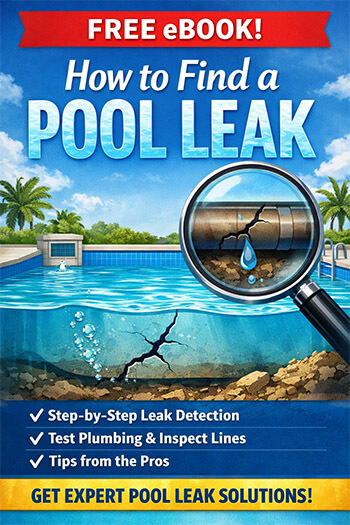
📘 Want a complete step-by-step guide?
👉Download our free ebook How to Find a Pool Leak and learn the exact methods professionals use to diagnose water loss, test plumbing, and pinpoint hidden leaks — all explained in homeowner-friendly terms.
✅ Located in New York and suspect a pool leak?
Pool Leak Detection LLC provides professional leak diagnostics using non-invasive testing methods to pinpoint hidden issues quickly and accurately. If your DIY tests confirm a problem, we’re here to help.
How to Tell If Your Pool Is Losing Water (Pool Leak Signs)
If you’re wondering “Why is my pool losing water?”, “Do I have a pool leak?”, or “Is this just evaporation?” — this guide walks you step-by-step through testing and diagnosis.
All swimming pools lose some water. This is completely normal. Evaporation, active swimmers splashing water out (splash-out), rainfall, and the backwashing process all affect the water level.
The key is to know how much loss is too much.
A useful benchmark to remember is this: if your pool loses more than two inches of water in a single week, you likely have a leak.
If your pool is showing other warning signs beyond water loss, our guide 10 Common Pool Problems – How to Fix Each One Fast walks through the most frequent issues homeowners face.
The Simple Water Level Test
This quick test helps you determine if water loss is due to plumbing issues or a problem with the pool’s structure.
1. Turn Off Equipment: Shut down the pool pump and any water Allow the water to become completely still.
2. Mark the Level: Use a piece of waterproof tape or a grease pencil to mark the current water level on the side of your pool or skimmer.
3. Wait 24 Hours: Let the pool sit undisturbed for a full day.
4. Measure the Drop: Check how much the water level has dropped below your mark.
5. Repeat with Pump On: Refill the pool to the original mark, then run the pump for 24 hours as you normally would. Measure the water loss again.
Comparing the results from these two 24-hour periods is very revealing. If you lose more water when the pump is running, the leak is likely in the pressure-side plumbing.
If the loss is the same whether the pump is on or off, it points to a structural or suction-side plumbing leak.
Common Causes of Pool Leaks
Even the most well-constructed pools can develop leaks over time. Shifting soil, aging materials, and mechanical stress can create vulnerabilities. Leaks often originate from a few common areas.
 Key areas to inspect include:
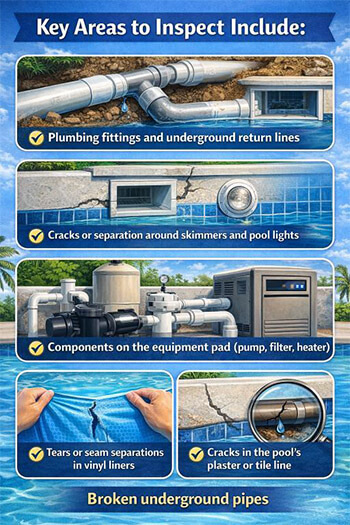 Key areas to inspect include:
● Plumbing fittings and underground return lines
● Cracks or separation around skimmers and pool lights
● Components on the equipment pad (pump, filter, heater)
● Tears or seam separations in vinyl liners
● Cracks in the pool’s plaster or tile line
● Broken underground pipes
If you want a quick visual guide to the most common failure points, see Where Do Most Pool Leaks Occur? (Top 7 Places to Check First).
Ignoring a leak, no matter how small, can lead to bigger problems. Unresolved leaks waste a significant amount of water and expensive chemicals.
More seriously, they can erode the soil that supports your pool’s walls and deck, potentially causing major structural damage.
Diagnosing Leaks Based on Equipment Behavior
Paying attention to when your pool loses water can help you narrow down the source of the problem.
Leak Occurs Only When the Pump Is Running
This almost always indicates a pressure-side leak. After water leaves the pump, it is pushed under pressure through the filter and back to the pool via the return lines.
A leak in this part of the system will often only appear when the system is pressurized.
Signs include:
- Water dripping or spraying from the waste or backwash line.
- Puddles or unusually green, wet spots in the yard downhill from the pool.
- Noticeable drops in water level while the system is running.
A robotic pool vacuum reduces load on your pump and filter while delivering deep, consistent cleaning — helping extend equipment life and improve water clarity.
Leak Occurs Only When the Pump Is Off
This usually points to a suction-side leak. The suction side includes the plumbing that pulls water from the skimmers and main drain to the pump.
When the pump is off, water can leak out of these lines.
Look for:
- Air bubbles being pushed out of the return jets when you first turn the pump on.
- Air visible in the pump basket lid.
- The pump struggling to prime or maintain pressure.
Continuous Water Loss (Pump On or Off)
If your pool loses water consistently regardless of whether the equipment is running, the problem is likely structural. This suggests an issue with the pool’s shell itself.
Common structural issues include:
- Cracks in the plaster or fiberglass shell.
- Separation around the skimmer body or return fittings.
- Damage to a vinyl liner.
👉 Find leaks fast with a pool leak detection kit
Confirm water loss, pinpoint problem areas, and avoid unnecessary repairs before they get expensive.
DIY Pool Leak Detection Methods
Before calling a professional, there are several effective tests you can perform yourself. These methods are simple and can help you pinpoint a leak’s location with surprising accuracy.
The Bucket Test: Evaporation vs. Leak
This classic test helps you confirm if your water loss is from a leak or just normal evaporation.
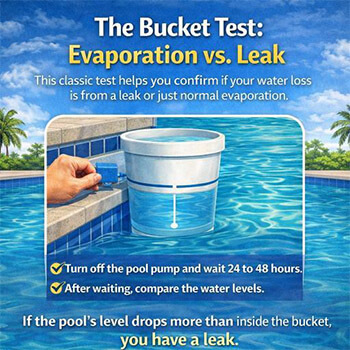 1. Place a 5-gallon plastic bucket on a pool step, ensuring it’s partially submerged but won’t float away.
2. Fill the bucket with pool water until the water level inside the bucket is the same as the pool water level outside the bucket.
3. Mark the water level on both the inside and outside of the bucket.
4. Turn off the pool pump and wait 24 to 48 hours.
5. After the waiting period, compare the two water If the pool water level has dropped more than the water level inside the bucket, you have a leak. The water in the bucket represents evaporative loss, as it’s subject to the same conditions as your pool.
For a deeper walkthrough with pro tips and common mistakes to avoid, see our full guide on how to perform the pool bucket test to confirm a leak.
Pool Leak Detection Checklist
Before calling a professional, run through this quick checklist:
✔ Mark and monitor water level
✔ Perform the bucket evaporation test
✔ Compare pump-on vs pump-off water loss
✔ Inspect skimmer, fittings, and visible plumbing
✔ Use dye to confirm suspected cracks or gaps
Dye Testing for Micro-Leaks
Specialized leak detection dye is a great tool for finding the exact source of a leak once you have a suspected area.
1. Turn off the pool circulation system so the water is still.
2. Go to the area where you suspect a leak (a crack, a fitting, the skimmer).
3. Carefully squeeze a small amount of dye into the water near the suspected spot.
4. Watch the dye If a leak is present, you will see the dye being pulled out of the pool into the crack or gap. This provides visual confirmation of the leak’s location.
Performing a Structural Inspection
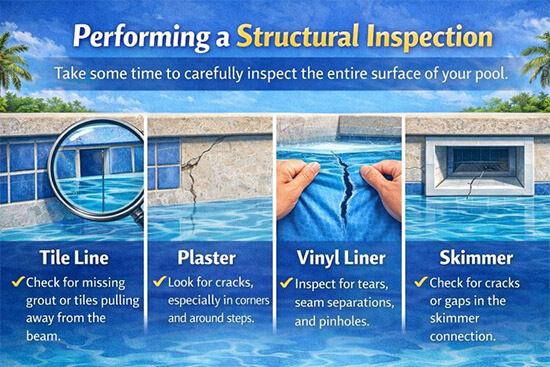
Take some time to carefully inspect the entire surface of your pool.
- Tile Line: Check for missing grout or tiles that have separated from the
- Plaster: Look for visible cracks, especially in corners and around steps. Debris that consistently collects in one spot or a dark stain on the plaster can indicate a crack where water is escaping.
- Vinyl Liner: Inspect for tears, separations at the seams, and pinholes, paying close attention around fittings like returns, lights, and stairs.
- Skimmer: The most common leak source is the connection between the plastic skimmer and the concrete Check for cracks or gaps in the skimmer throat.
Vinyl liner pools should be inspected carefully for tears, seam separation, or weak spots— even aggressive brushing can contribute to liner damage. Learn more in our guide:
Can Brushing Your Pool Damage the Liner? The Hidden Risk.
Special Considerations for Leak Types
Certain types of pools and equipment have unique vulnerabilities.
Skimmer Leaks
Skimmers frequently develop leaks where the plastic body meets the concrete shell. This joint can fail due to shifting and settling.
You can use pool putty as a temporary fix, but a permanent repair may require professional resurfacing or sealant application.
Underground Plumbing
If you suspect an underground leak, diagnosis becomes more difficult. You can start by using rubber plugs to isolate different lines (e.g., plug the skimmers and run the pump using only the main drain).
If the leak stops, you’ve narrowed down the problem line. However, finding the exact spot often requires professional tools like pressure testers or acoustic equipment.
👉 Underground pool leaks require precision. See how professional leak detection tools locate hidden pipe failures in this detailed video guide.
When to Call a Professional
While many leaks can be found and fixed by a pool owner, some situations require expert help. You should call a professional leak detection service if:
- Water loss consistently exceeds two inches per week
- Your DIY tests confirm a leak, but you cannot find the source.
- You see large, structural cracks in the pool shell.
- You strongly suspect an underground plumbing leak.
Professionals use specialized tools like electronic leak detectors, hydrophones (underwater microphones), and pressure testing equipment to find hidden leaks precisely and non-invasively.
Above-Ground Pool Leak Detection
Above-ground pools face many of the same leak risks as in-ground pools. However, diagnosing and repairing leaks is often simpler, as components are more accessible and visible.
Common Sources of Above-Ground Pool Leaks:
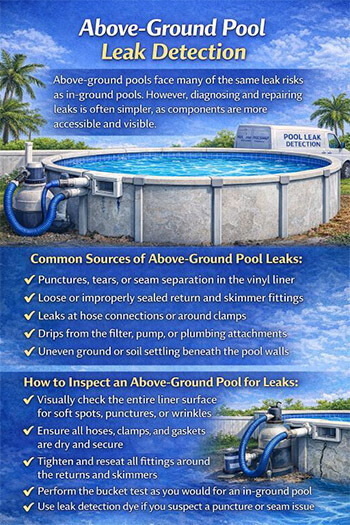 Common Sources of Above-Ground Pool Leaks:
● Punctures, tears, or seam separation in the vinyl liner
● Loose or improperly sealed return and skimmer fittings
● Leaks at hose connections or around clamps
● Drips from the filter, pump, or plumbing attachments
● Uneven ground or soil settling beneath the pool walls
How to Inspect an Above-Ground Pool for Leaks:
● Visually check the entire liner surface for soft spots, punctures, or wrinkles
● Ensure all hoses, clamps, and gaskets are dry and secure
● Tighten and reseat all fittings around the returns and skimmers
● Perform the bucket test as you would for an in-ground pool
● Use leak detection dye if you suspect a puncture or seam issue
Because above-ground pools rely heavily on the liner for water retention, a small puncture or seam tear can have a noticeable impact on water level.
Promptly repairing leaks will prevent liner stretching, wall distortion, and more costly damage down the line.
👉 Explore our Amazon Storefront for trusted pool tools, leak detection kits, and maintenance products we actually use and recommend.
Frequently Asked Questions About Pool Leak Detection
Understanding all the aspects of pool leak detection can be overwhelming, especially if it’s your first experience.
Below are some frequently asked questions to help clarify common concerns and provide practical advice for pool owners.

How much water loss is normal for a swimming pool?
Most pools naturally lose about 1/4 to 1/2 inch of water per day due to evaporation. Factors like air temperature, humidity, direct sunlight, wind, and how often you use the pool all contribute.
If you notice more than 2 inches of water loss per week, this could indicate a leak rather than simple environmental loss.
How can I tell if my pool leak is plumbing-related or a structural issue?
To distinguish the source of your leak, use a 24-hour pump cycle comparison:
- Water loss only when the pump is running: This points to a pressure-side plumbing leak, usually in the return lines.
- Water loss when the pump is off: Likely a suction-side plumbing leak, often in the lines between the skimmer/main drain and the pump.
- Continuous water loss (pump on or off): This suggests a structural issue with the shell, tile line, fittings, or liner.
Document the test results carefully to help guide repairs and communicate clearly with professionals if needed.
Does evaporation really cause noticeable water loss?
Yes! Evaporation is a significant factor, especially in warm, windy, or dry climates, and pools with water features like fountains, spillovers, or waterfalls. While gradual daily reduction is expected, a rapid or sudden drop is rarely due to evaporation and may indicate a leak.
What is the bucket test and how accurate is it?
The bucket test is a reliable, DIY method for distinguishing between evaporation and a true leak.
By comparing the water drop in a bucket to that of your pool over 24 to 48 hours, you get a clear indication: if your pool loses more water than the bucket, you likely have a leak.
For best results, ensure the test area is sheltered and that the bucket is filled to match the pool’s water level inside and out.
Can a small pool leak cause major damage?
Definitely. Even seemingly minor leaks can cause substantial and costly problems if left unaddressed, including:
- Erosion of the soil under your pool or deck
- Structural movement or cracking
- Constant strain on pool equipment due to low water levels
- Ongoing chemical imbalance and increased operating costs
Prompt leak detection and repair will protect your pool investment and prevent small issues from growing into large repairs.
Should I use leak detection dye?
Leak detection dye is a safe and effective way to pinpoint the location of small cracks or leaking fittings.
It’s easiest to use with the pump off and water as still as possible. Simply apply the dye near a suspected area and observe if it’s drawn into a crack or joint.
When should I call a professional leak detection service?
You should seek a professional inspection if:
- Water loss exceeds 2 inches weekly despite accounting for evaporation
- DIY tests confirm leakage but you can’t locate the source
- There are visible cracks or shifting in the pool’s shell or deck
- You suspect the problem is in underground plumbing
Professionals have specialized equipment to locate leaks quickly and without unnecessary disruption to your property.
👉 Save time and shop smarter — browse our Amazon Storefront for reliable pool care products tested by pool professionals
Conclusion
Most pool leaks are not a catastrophe. They are diagnosable with careful observation and systematic testing.
By using the methods outlined in this guide, you can quickly determine whether you are seeing normal evaporation or a genuine leak that needs attention.
Early detection is the best way to prevent wasted water, chemical imbalances, and costly structural damage.
Staying proactive with your pool maintenance ensures your pool remains efficient, safe, and ready for you to enjoy.
Follow Pool Leak Detection LLC
 Follow Pool Leak Detection LLC
Follow Pool Leak Detection LLC to stay updated with expert tips designed to help you prevent costly problems, diagnose issues early, and keep your pool running efficiently all season long.
We regularly share leak-prevention strategies, troubleshooting walkthroughs, equipment care tips, and homeowner-friendly education to give you confidence in managing your pool.
- YouTube: Pool Leak Detection LLC
- Instagram: @poolleakdetectionllc
- Facebook: Pool Leak Detection LLC
- Pinterest: Pool Leak Detection LLC
- LinkedIn: Chris Ilias
Stay connected and learn how to protect your pool investment with professional guidance you can apply right away.