
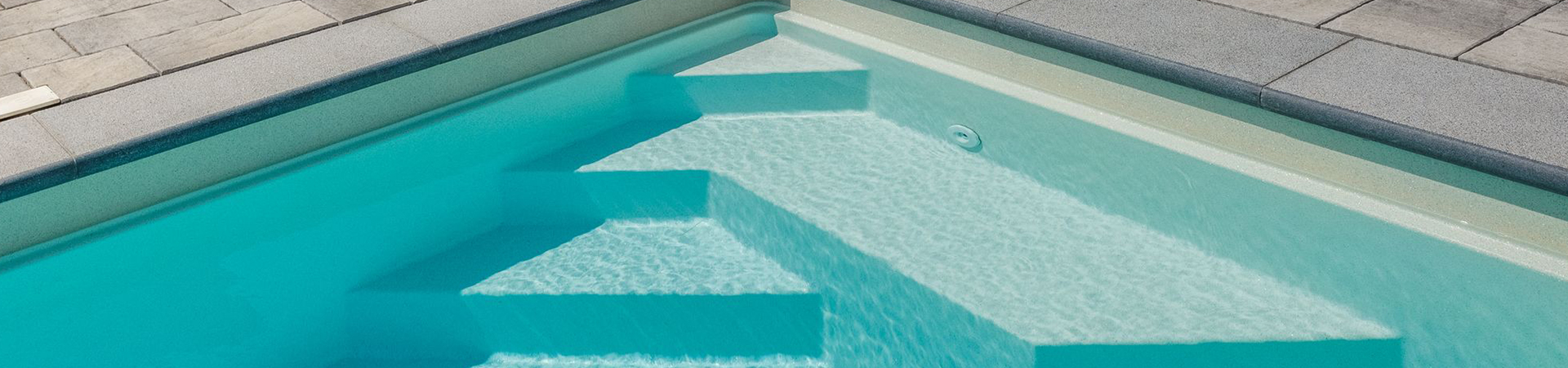
How to Design a Stunning Pool Backyard Oasis: Planning, Layout & Luxury Ideas
Designing a pool backyard involves more than choosing a pool shape — it requires planning layout zones, privacy, shade, circulation flow, and long-term usability.
Whether you’re building new or upgrading an existing yard, smart design decisions prevent costly mistakes and create a backyard that works as beautifully as it looks.
A thoughtfully designed poolscape not only enhances your home’s value but also transforms unused yard space into a year-round retreat.
In this guide, we’ll explore pool backyard design principles, layout strategies, and luxury features to help you create a stunning oasis that balances form and function.
Start With a Backyard Pool Master Plan
Every successful pool backyard begins with a well-thought-out plan. Instead of focusing solely on the pool’s shape, take a step back and visualize how the entire space will function.
Key Questions to Ask:
- Will this space prioritize entertaining or relaxation?
- Do you prefer resort-style luxury or modern minimalism?
- How will traffic flow between the house, patio, and pool?
- Where will you place shade, seating, and focal points?
Think in Zones, Not Features:
Organizing your backyard into functional zones ensures a cohesive and clutter-free design:
- Swimming & Activity Zone
- Lounge & Seating Zone
- Shade & Retreat Zone
- Dining & Entertainment Zone
- Landscaping & Privacy Buffers
This zoning approach creates a balanced and intentional outdoor space.
Common Pool Backyard Design Mistakes to Avoid
- Oversizing the pool and eliminating usable yard space
- Ignoring sun path and wind direction
- Poor traffic flow between home and pool
- Insufficient shade planning
- Choosing aesthetics over maintenance practicality
- Underestimating lighting needs
👉 New to pool ownership? Read our beginner pool maintenance guide.
Budget Considerations for Pool Backyard Design
Designing a pool backyard is as much about smart financial planning as it is about aesthetics. Understanding budget tiers helps you prioritize features that deliver the greatest impact without overspending.
Think of your project in layers — foundational layout, enhancements, and luxury upgrades — each building upon the last.
Essential Layout Planning
This tier focuses on creating a functional, safe, and visually balanced space.
Includes:
- Pool layout and circulation planning
- Basic decking or patio surface
- Minimal landscaping for structure
- Safety clearance zones
- Entry and access points
Goal: Establish usability and flow.
Best for: Homeowners prioritizing practicality and long-term planning.
👉 Explore pool safety essentials
Mid-Range Enhancements (Comfort Tier)
This level improves comfort, appearance, and daily usability.
Includes:
- Expanded patio or seating zones
- Shade structures or umbrellas
- Layered landscaping
- Basic lighting
- Upgraded materials
Goal: Enhance everyday enjoyment.
Best for: Families wanting a polished, welcoming backyard experience.
Luxury Upgrades (Experience Tier)
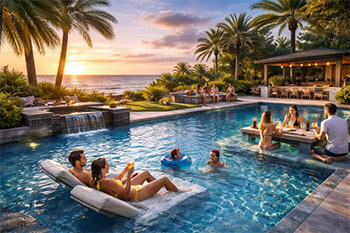 These features elevate the backyard into a resort-style environment.
Includes:
● Integrated spa or water features
● Architectural pergolas or cabanas
● Advanced lighting systems
● Outdoor kitchens or fire elements
● Smart automation controls
Goal: Create a premium outdoor living destination.
Best for: Homeowners seeking high-end comfort and entertainment value.
Pro Insight:
Landscaping, hardscaping, and upgrades often equal or exceed pool installation costs. Planning tiers early prevents budget creep and ensures intentional spending.
Step-by-Step Pool Backyard Planning Checklist
1. Define lifestyle goals
2. Measure available space
3. Map sun and shade patterns
4. Establish functional zones
5. Plan circulation flow
6. Select materials
7. Design landscaping
8. Layer lighting
9. Choose furnishings
10. Plan upgrades
Pool Design: Balancing Aesthetics & Practical Use
The pool is the centerpiece of your backyard. Its design should align with your lifestyle while remaining practical for maintenance.
Smart Pool Design Tips:
- Geometric Pools: Ideal for modern homes with clean lines that simplify construction and upkeep.
- Shallow Lounge Shelves: Perfect for sunbathing, kids, and
- Smooth Interior Contours: Enhance water circulation, reduce debris traps, and simplify cleaning.
- Functional Depth Planning: Match the pool’s depth to its intended use, whether for recreation, exercise, or lounging.
Pro Tip: Avoid overly complex shapes unless your landscape demands it. Simpler designs often age better both stylistically and mechanically.
Designing a Backyard Oasis Around an Above-Ground Pool
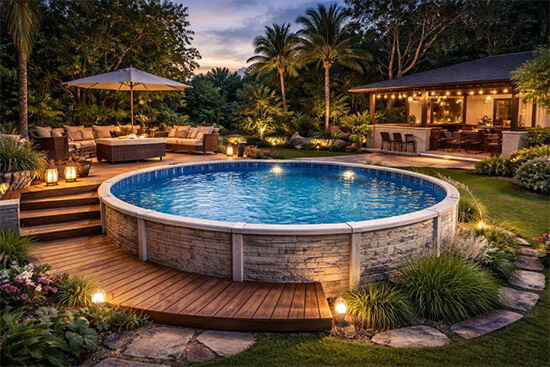
An above-ground pool can deliver the same backyard retreat experience when thoughtfully integrated into the landscape.
Key strategies:
- Build partial decking to create visual continuity
- Add landscaping to soften pool edges
- Create lounge zones adjacent to entry points
- Use fencing and greenery for privacy
- Coordinate patio materials with pool structure
The goal is to make the pool feel intentional — not temporary — within the yard’s design.
Privacy Design: Creating a Personal Retreat
Privacy is essential for transforming your pool area into a sanctuary. Thoughtful screening enhances comfort and adds a sense of luxury.
Privacy Options:
- Evergreen Hedges: Natural and lush screening.
- Architectural Fencing: Combine with greenery for a modern look.
- Layered Landscaping: Adds depth and visual interest.
- Strategic Tree Placement: Provides shade and privacy.
Incorporate privacy elements that soften hardscapes and visually frame the pool.
Shade Planning: Comfort Beyond Sunlight
A comfortable backyard requires thoughtful shade planning to extend usability throughout the day.
Shade Solutions:
- Pergolas or Cabanas: Add architectural interest and permanent shade.
- Cantilever Umbrellas: Offer flexible coverage.
- Natural Shade: Use trees for organic cooling.
- Covered Patios: Create transitional living spaces.
Shade zones create micro-environments for relaxation without leaving the pool area.
👉 Learn how to reduce pool energy costs
Patio Integration: Indoor–Outdoor Flow
The patio serves as the bridge between your home and pool. A seamless design enhances flow and usability.
Best Practices for Patio Design:
- Match materials to your home’s interior finishes.
- Maintain clear sightlines to the pool.
- Create multi-purpose gathering areas.
- Ensure circulation paths feel intuitive.
The goal is to design an outdoor living room, not just a deck.
Outdoor Furniture: Style Meets Durability
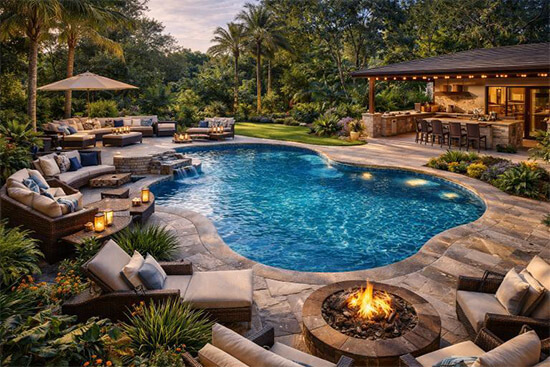
Furniture plays a crucial role in defining how your backyard is used. Choose pieces that are both stylish and durable.
Furniture Tips:
- Opt for weather-resistant materials like powder-coated aluminum, teak, or HDPE.
- Use modular seating for flexibility.
- Select cushions designed for moisture resistance.
- Ensure furniture complements your home’s architectural style.
Well-planned furniture arrangements prevent clutter and encourage natural gathering zones.\
Landscaping: Framing the Experience
Landscaping softens hard surfaces and sets the mood for your backyard oasis.
Strategic Landscaping Can:
- Guide movement through the space.
- Frame views and focal points.
- Add color, texture, and depth.
- Improve privacy and reduce heat reflection.
Use layered plant heights and drought-tolerant species to minimize maintenance while maximizing visual appeal.
Designing for Long-Term Maintenance
A beautiful pool backyard should remain easy to maintain long after construction is complete. Smart maintenance planning protects your investment, reduces operating costs, and prevents small issues from turning into major repairs.
Design decisions made early have a lasting impact on usability and upkeep.
Drainage Planning
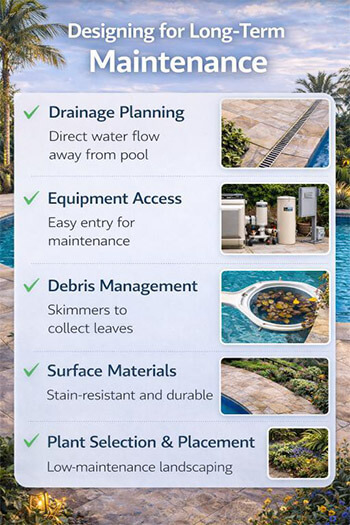 Proper drainage prevents water accumulation that can damage decking, landscaping, and pool structures.
Best practices:
- Grade surfaces to direct water away from the pool and home
- Install discreet drainage channels where needed
- Avoid low spots that trap standing water
Good drainage reduces erosion, staining, and long-term surface damage.
Equipment Access
Pool equipment should be accessible without disrupting the backyard’s visual appeal.
Design considerations:
- Leave adequate clearance for servicing pumps and filters
- Position equipment away from seating zones for noise reduction
- Maintain clear pathways for technicians
Hidden equipment is attractive — inaccessible equipment is costly.
Debris Management
Leaves, grass clippings, and airborne debris affect cleaning frequency and water quality.
Smart planning includes:
- Selecting low-shedding plants near the pool
- Creating buffer landscaping zones
- Positioning trees strategically to minimize overhang
Reducing debris lowers maintenance time and extends equipment life.
👉 Shop pool vacuum cleaners to keep your pool clean with less effort.
Surface Materials
Decking and hardscape materials influence cleaning effort and durability.
Recommended characteristics:
- Slip-resistant finishes
- Heat-reflective surfaces
- Non-porous or sealed materials
- Easy-to-clean textures
Low-maintenance surfaces preserve appearance and safety.
Plant Selection & Placement
Landscaping should enhance beauty without creating excessive upkeep.
Guidelines:
- Choose drought-tolerant, low-litter plants
- Avoid thorny or invasive species near walkways
- Place plants to allow airflow and drying
- Use layered placement to protect hardscape edges
Well-planned greenery supports both aesthetics and maintenance efficiency.
Pro Insight:
Maintenance-friendly design is invisible when done right — but its benefits are felt every season.
Safety Design Considerations for Pool Backyards
A well-designed pool backyard should prioritize safety without sacrificing aesthetics. Thoughtful planning reduces risk, improves visibility, and creates a secure environment — especially important for families with children, guests, or pets.
👉 Read next: Pool Safety Signs Every Backyard Owner Should Install
Slip-Resistant Decking
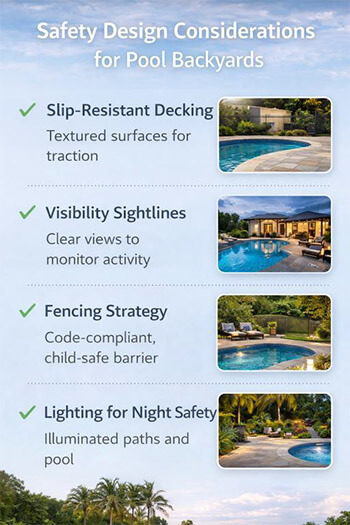 Wet surfaces increase fall risk, making material selection critical.
Best practices:
- Choose textured concrete, brushed stone, or slip-rated pavers
- Avoid glossy or polished finishes near water
- Maintain proper drainage to reduce pooling
Safe surfaces improve both comfort and long-term usability.
Visibility Sightlines
Clear sightlines allow adults to monitor activity from multiple vantage points.
Design considerations:
- Avoid tall obstructions near pool edges
- Maintain visual connection from patio seating areas
- Position landscaping to frame — not block — views
Good visibility supports supervision without compromising design.
Fencing Strategy
Barriers help prevent unsupervised access while maintaining aesthetic harmony. Planning tips:
- Use code-compliant fencing as required by local regulations
- Select designs that blend with landscaping
- Position gates for controlled entry
Safety fencing can feel integrated rather than intrusive.
👉 Shop pool fencing options to add safety and style to your backyard.
Lighting for Night Safety
Proper illumination prevents accidents and enhances nighttime visibility.
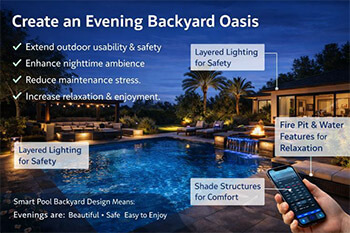 Layer lighting to include:
● Underwater Pool Lighting: Creates a resort-like ambiance.
● Pathway Illumination: Enhances safety and navigation.
● Accent Uplighting: Highlights plants and architectural features.
● Patio Ambient Lighting: Sets the mood for evening gatherings.
Balanced lighting extends usability while protecting movement after dark.
Pro Insight: Safety-focused design is most effective when integrated early — not added as an afterthought.
👉 Shop pool lighting options to transform your backyard after dark.
Bonus: Add Value With Smart Upgrades
If your budget allows, consider adding features that elevate usability and luxury:
- Automated Pool Controls: Simplify maintenance and operation.
- Water Features: Add soothing sounds and visual interest.
- Fire Elements: Create contrast and warmth.
- Outdoor Kitchens: Perfect for entertaining.
- Spa Integration: Enhance relaxation.
These upgrades transform your pool into a true backyard destination.
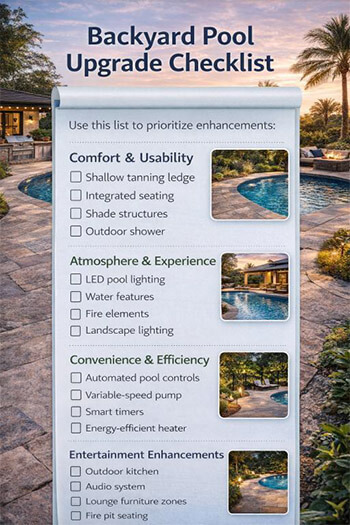
 Backyard Pool Upgrade Checklist
 Backyard Pool Upgrade Checklist
Use this list to prioritize enhancements:
Comfort & Usability
- Shallow tanning ledge
- Integrated seating
- Shade structures
- Outdoor shower
Atmosphere & Experience
- LED pool lighting
- Water features
- Fire elements
- Landscape lighting
Convenience & Efficiency
- Automated pool controls
- Variable-speed pump
- Smart timers
- Energy-efficient heater
Entertainment Enhancements
- Outdoor kitchen
- Audio system
- Lounge furniture zones
- Fire pit seating
Choose upgrades based on lifestyle goals, not trends.
Budget vs Luxury Backyard Pool Design Budget-Friendly Approach
- Simple geometric pool design
- Minimal hardscaping
- Basic landscaping
- Movable shade solutions
- Functional seating
Best for: Practical homeowners prioritizing usability.
Luxury Backyard Experience
- Custom pool shape with features
- Integrated spa or water elements
- Architectural shade structures
- Layered landscaping
- Outdoor kitchen or fire features
- Advanced lighting and automation
Best for: Resort-style outdoor living.
Both approaches succeed when guided by smart planning.
Conclusion: Designing a Backyard That Lives Well
A pool backyard should be an extension of your lifestyle, balancing beauty, comfort, and purpose.
By planning functional zones, simplifying pool geometry, prioritizing privacy, and designing for real-life experiences, you can create more than just a pool — you can create a private resort.
Great backyard design isn’t about excess; it’s about thoughtful cohesion. When executed well, your pool backyard becomes a sanctuary that delivers relaxation, entertainment, and long-term value for years to come.
Frequently Asked Questions About Pool Backyard Design

How much space do I need to design a pool backyard?
While pool size varies, most functional layouts require additional space for seating, circulation, and safety clearance. Even small yards can support a well-designed pool zone with smart planning.
Should landscaping be installed before or after the pool?
Major hardscaping and pool construction should come first. Landscaping is typically finalized afterward to prevent damage during construction.
What patio materials work best around pools?
Slip-resistant materials like textured concrete, travertine, pavers, or brushed stone provide durability, comfort, and safety.
How do I design shade around a pool?
Combine structural shade (pergolas, covered patios) with movable options (umbrellas) and natural tree placement for flexible comfort.
What backyard pool upgrades add the most value?
Lighting, automation, outdoor kitchens, and integrated spas tend to provide the highest usability and resale appeal.
Follow Pool Leak Detection LLC
 Follow Pool Leak Detection LLC
Follow Pool Leak Detection LLC to stay updated with expert tips designed to help you prevent costly problems, diagnose issues early, and keep your pool running efficiently all season long.
We regularly share leak-prevention strategies, troubleshooting walkthroughs, equipment care tips, and homeowner-friendly education to give you confidence in managing your pool.
- YouTube: Pool Leak Detection LLC
- Instagram: @poolleakdetectionllc
- Facebook: Pool Leak Detection LLC
- Pinterest: Pool Leak Detection LLC
- LinkedIn: Chris Ilias
Stay connected and learn how to protect your pool investment with professional guidance you can apply right away.