
The Benefits of a Saltwater Swimming Pool: Why Switch?
Creating your ideal backyard oasis doesn’t have to be complicated. Upgrading to a saltwater system may be one of the smartest improvements you can make.
Saltwater pools are growing in popularity because they offer softer water, simplified maintenance, and long-term savings compared to traditional chlorine systems. They also provide a more comfortable swimming experience while reducing harsh chemical exposure.
Let’s break down exactly why saltwater pool benefits are making them the preferred choice for modern pool owners.
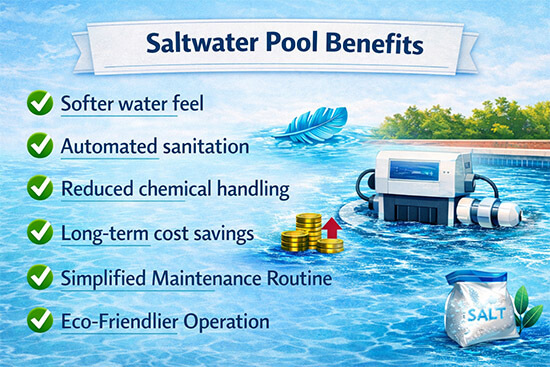
Quick Summary: Saltwater Pool Benefits
● Softer water feel
● Automated sanitation
● Reduced chemical handling
● Long-term cost savings
● Eco-friendly operation
How Does a Saltwater Pool Work?
A saltwater pool uses a salt chlorine generator (SCG) to convert dissolved salt into a low, steady level of chlorine through electrolysis. Instead of manually adding buckets of chlorine, the system continuously sanitizes the water for you.
This process creates:
● More stable water chemistry
● Lower chlorine concentration
● Softer-feeling water
The result is cleaner water that feels gentler on swimmers while reducing maintenance demands.
Just getting started? Read our Swimming Pool Maintenance for Beginners (Complete Guide) to build confidence with basic pool care.
1. Gentler on Skin, Eyes, and Swimmer Comfort
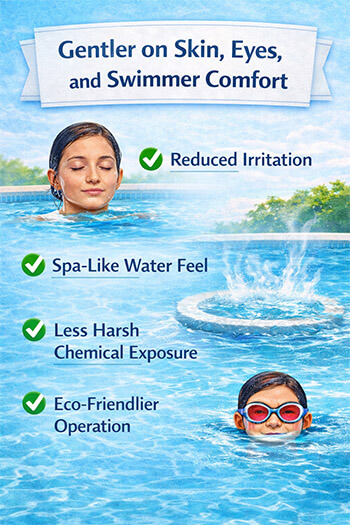
One of the biggest saltwater swimming pool advantages is how comfortable they feel compared to traditional chlorine systems. Anyone who has swum in a public pool knows the sting of high chemical levels. Salt systems change that dynamic entirely.
Reduced Irritation
Saltwater pools maintain lower, consistent chlorine levels. This stability helps minimize red eyes, itchy skin, dry hair, and faded swimsuits. You avoid the massive “shock” treatments that often lead to chemical burns or skin sensitivity.
Spa-Like Water Feel
The lightly salted water feels smoother and more natural, similar to soft water in a home shower. It creates a relaxing swimming experience that feels less like a chemical bath and more like a spa day.
Less Harsh Chemical Exposure
Because chlorine is generated gradually, swimmers are exposed to fewer chemical spikes and strong odors. You won’t walk away smelling like bleach for hours after your swim.
For families or frequent swimmers, this comfort difference is often the deciding factor in making the switch.
Salt levels are typically 2,500–3,500 ppm, far lower than ocean water (~35,000 ppm).
2. Easier Pool Maintenance and Automation
Many homeowners hesitate to own a pool because of the work involved. Saltwater systems simplify routine pool care significantly.
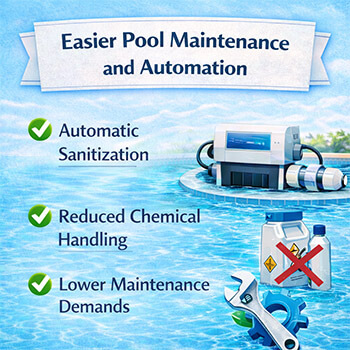
Automatic Sanitization
The generator produces chlorine continuously. This prevents sudden drops or spikes in sanitation levels that usually require emergency balancing. The system works while you sleep, ensuring the water is ready when you are.
Reduced Chemical Handling
You won’t need frequent chlorine purchases or constant dosing adjustments. Say goodbye to storing dangerous buckets of tablets or liquid chlorine in your garage.
Lower Maintenance Demands
Routine upkeep mainly involves cleaning the salt cell every few months and monitoring salt and pH levels. These tasks are straightforward and infrequent compared to the daily grind of a traditional chlorine pool.
This automation allows pool owners to spend more time swimming and less time managing chemistry sets.
3. Long-Term Cost Savings
While saltwater systems require an upfront investment—typically for the generator and installation—many pool owners see significant savings over time.
Lower Ongoing Chemical Costs
Salt is cheap. It replaces expensive recurring chlorine purchases, significantly reducing your long-term supply expenses. Depending on the size of your pool, the system can pay for itself within a few seasons.
Equipment Protection
Stable water chemistry reduces stress on liners, fittings, and components. By avoiding harsh chemical spikes, you potentially extend the life of your pump and other pool equipment.
Added Home Appeal
Saltwater pools are a sought-after feature for buyers, increasing perceived property value. If you ever sell your home, listing saltwater pool benefits can be a major selling point.
To further lower long-term pool expenses, see our How to Save Energy with Your Swimming Pool: A Complete Guide for smart efficiency strategies.
4. An Eco-Friendly Pool Option
For those looking to reduce their environmental footprint, this is a great choice. Eco-friendly pool options are in high demand, and salt systems fit the bill perfectly.
Reduced Chemical Runoff
Fewer harsh chemicals entering drainage systems helps minimize environmental impact. When you backwash your pool, the water contains fewer harsh stabilizers and additives.
Energy Efficiency Compatibility
Salt systems pair well with energy-efficient pumps, timers, and solar heating solutions. Because the chlorination is automated, you can run your pump at optimal times for energy savings.
Sustainable Operation
Modern systems require fewer consumables, lowering waste and transport impact. You aren’t buying plastic jugs of chemicals every week, which reduces plastic waste.
Pros and Cons of a Saltwater Swimming Pool
Saltwater pools offer major advantages, but they aren’t perfect for every situation.
Understanding both sides helps you decide whether switching makes sense for your home and budget.
✅ Pros of a Saltwater Pool
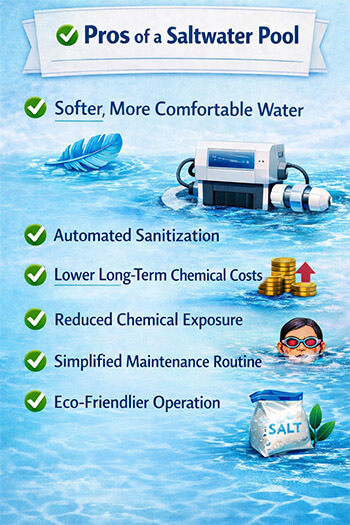
Softer, More Comfortable Water
Lower, consistent chlorine levels reduce irritation to skin, eyes, and hair, creating a smoother swimming experience.
Automated Sanitization
A salt chlorine generator produces chlorine continuously, minimizing manual chemical handling and sudden water imbalances.
Lower Long-Term Chemical Costs
Salt replaces frequent chlorine purchases, often reducing ongoing pool supply expenses.
Reduced Chemical Exposure
Fewer harsh chemical spikes mean less odor, fewer irritants, and safer storage conditions.
Simplified Maintenance Routine
Routine care mostly involves occasional salt cell cleaning and water testing rather than constant chemical adjustments.
Eco-Friendlier Operation
Saltwater systems use fewer consumables and generate less chemical waste compared to traditional chlorine pools.
⚠ Cons of a Saltwater Pool
Higher Upfront Equipment Cost
Salt chlorine generators and installation add to the initial investment.
Salt Cell Replacement
Cells typically last 3–7 years and require periodic replacement.
Potential Corrosion Risk
Improperly balanced saltwater can accelerate corrosion on certain metals or stone surfaces if not monitored.
Water Balance Still Required
Saltwater pools are not maintenance-free; pH, alkalinity, and salt levels must still be monitored.
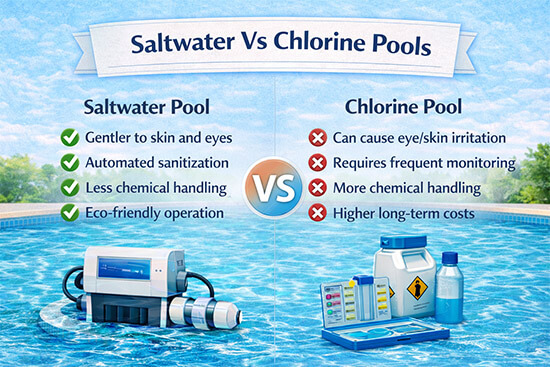
Still deciding? Our detailed guide on Saltwater vs. Chlorine Pools: Which One Is Right for You? walks through real-world differences to help you choose confidently.
Switching to a Saltwater Pool: What to Expect
If you’re considering the upgrade, here are the practical details you need to know.
Installation Costs
Most salt chlorine generator systems range from $500–$3,000. The price depends on your pool size (gallons) and equipment compatibility.
Routine Care
Occasional salt cell cleaning and water testing are required. However, it is far less intensive than traditional chlorine maintenance. You simply check the panel on your generator to ensure it is producing chlorine.
System Longevity
Proper care helps extend the lifespan of both the generator and pool equipment. Salt cells typically last 3-7 years before needing a replacement core.
Is a Saltwater Pool Right for You?
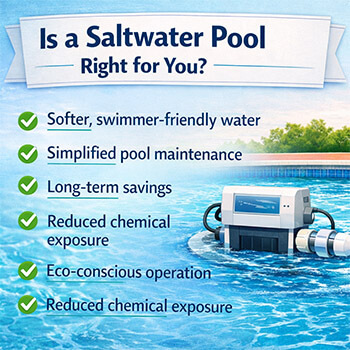 A saltwater system is ideal for homeowners who want:
✔ Softer, swimmer-friendly water
✔ Simplified pool maintenance
✔ Long-term savings
✔ Reduced chemical exposure
✔ Eco-conscious operation
If those priorities match your goals, a saltwater pool upgrade is a strong investment.
Upgrade Your Pool Experience
Switching to a saltwater system can transform how your pool feels, functions, and costs to maintain. Whether you’re installing a new pool or upgrading an existing one, saltwater technology offers comfort, efficiency, and sustainability.
Frequently Asked Questions About Saltwater Pools

Are saltwater pools chlorine-free?
No. Saltwater pools still use chlorine — they simply generate it automatically from salt. The difference is that chlorine levels stay more stable and typically feel gentler than manually treated pools.
Are saltwater pools easier to maintain?
Yes — but they are not maintenance-free. The salt chlorine generator automates sanitization, reducing chemical handling. You’ll still need to monitor pH, salt levels, and clean the salt cell periodically.
Do saltwater pools cost more?
Upfront equipment costs are higher, but long-term chemical expenses are often lower. Many homeowners find the system pays for itself over time through reduced supply purchases.
Can saltwater damage pool equipment?
When properly balanced, saltwater systems are safe for modern pool components. Problems typically occur only if water chemistry is neglected or incompatible materials are used.
How salty is a saltwater pool?
Salt levels are usually around 2,500–3,500 ppm, which is far lower than ocean water. Most swimmers barely notice the salt content.
Are saltwater pools worth it?
For many homeowners, yes. The comfort, automation, and long-term savings make saltwater systems an appealing upgrade — especially for frequent swimmers.
👉 Download our free Pool Leak Detection ebook and learn how to spot hidden leaks, test water loss, and protect your pool before small problems become expensive repairs.
Stay Connected for More Pool Tips
Follow us for expert advice on pool maintenance, leak detection, and backyard safety.
● YouTube: Pool Leak Detection LLC
● Instagram: @poolleakdetectionllc
● Facebook: Pool Leak Detection LLC
● Pinterest: Pool Leak Detection LLC
● LinkedIn: Chris Ilias